What Is the Minimum Slope for a Metal Roof?
There is no single minimum slope for every metal roof. The requirement depends on the exact panel profile, seam design, and installation system. Standing seam and exposed-fastener panels have different product specifications, and even panels within the same category can have different minimum slopes. Check the selected manufacturer’s installation instructions and applicable local requirements before choosing a system.
This guide explains how to compare types of metal roofing systems and what to ask before choosing one for your property.
Why Slope Matters on a Metal Roof
Roof slope describes the vertical rise over a horizontal run. For example, a 4:12 slope rises 4 inches for every 12 inches of horizontal distance. Learn more about roof slope and pitch.
Slope affects drainage and helps determine which panel assemblies are suitable. Panel design, seams, fasteners, flashing, and drainage details also matter. A steeper roof is not automatically a substitute for a correctly specified and installed system.
Check both installation instructions and warranty terms. Installing a product outside its specified requirements may affect performance and coverage; confirm the terms for the exact product and project.
Minimum Slope for Different Types of Metal Roofing
Use the following checklist when comparing systems. Category names alone do not establish the minimum slope or approve a roof assembly.
| Roof option | What to verify before selecting it |
|---|---|
| Mechanically seamed standing seam | Exact product, seam configuration, published minimum slope, substrate, and specified sealing details |
| Snap-lock standing seam | Product-specific minimum slope, deck requirements, and flashing details |
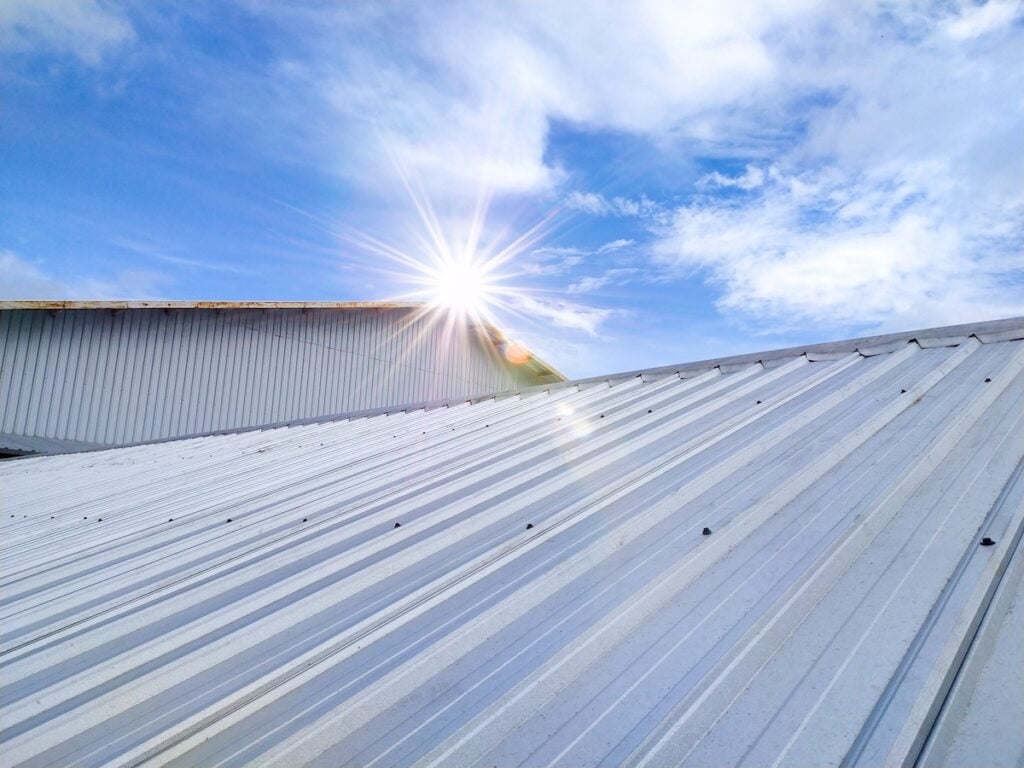
| R-panel / exposed-fastener metal | Exact panel’s minimum slope, side/end-lap details, specified sealants, and fasteners |
If you are comparing metal with other materials, read our metal roofing and shingles guide, then discuss which products fit your roof’s measured slope and condition.
Manufacturer Examples: Two Standing-Seam Minimum Slopes
Published product specifications show why the panel name matters. MBCI lists a 3:12 minimum slope for LokSeam, a snap-together standing-seam panel. Its Double-Lok system lists a 1/4:12 minimum slope. These are specifications for those particular products, not a minimum for every standing-seam roof.
See the manufacturer’s LokSeam product information and Double-Lok product information. Have your roofer confirm the current installation instructions, measured roof slope, supporting structure, seams, flashing, and drainage for the proposed assembly. These examples do not establish which product M&M Roofing will specify for your project.
What Should You Check on a Low-Slope Roof?
Do not rely on the phrase “low-slope compatible” without a product name and installation instructions. Ask how the proposed assembly addresses drainage, seams, laps, penetrations, and transitions. Have a roofing professional assess the existing roof rather than climbing onto it to take measurements.
7 Factors to Review Before Choosing a Metal Roof
1. Exact Panel System
Identify the manufacturer and product, not just “standing seam” or “R-panel.” Confirm the published minimum slope and the installation details for that exact assembly.
2. Weather and Exposure
Discuss the property’s exposure to wind and rain. Have the proposed assembly and attachment details checked against applicable project requirements. Location in Texas alone does not establish one required slope.
3. Roof Length and Drainage
Review roof dimensions, drainage paths, valleys, gutters, and penetrations. A panel’s listed minimum slope is only one part of assessing how the completed roof will drain.
4. Substrate and Underlayment
Confirm the required deck or supporting structure and any specified underlayment. Underlayment does not make a panel suitable for a slope below its installation requirements.
5. Local Requirements
Confirm the code and permit requirements applicable to the property with the local authority. Do not assume every Texas jurisdiction uses identical requirements.
6. Installation and Warranty Documents
Ask for the manufacturer’s installation instructions and the warranty terms that apply to the selected product. Review requirements for seams, fasteners, laps, flashing, and maintenance before approving the work.
7. Building Use and Access
Homes, agricultural buildings, and commercial properties can have different assemblies and access needs. Discuss rooftop equipment, service access, and any building operations that affect the proposed work.
Choosing Underlayment for a Metal Roof
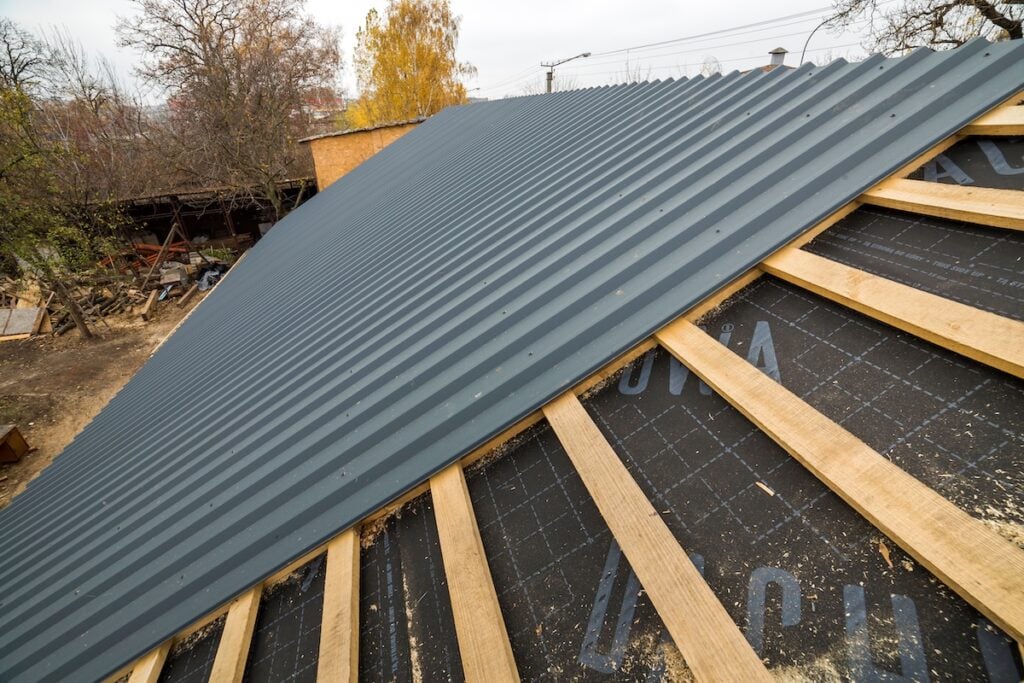
There is no universal “best” underlayment for every metal roof. Selection depends on the panel system, substrate, installation instructions, and applicable local requirements. Confirm compatibility and any temperature, exposure, fastening, and application limits for the specific underlayment.
Ask where the product is to be installed and how details at eaves, valleys, and penetrations will be handled. Do not assume a generic membrane or a statewide rule replaces the requirements for your project.
What if the Roof Appears Flat?
Have the actual slope and drainage assessed before selecting a panel system. If the proposed metal product is unsuitable, ask about appropriate alternatives or a professionally designed change to the roof assembly. The choice should follow a review of the existing structure and project requirements.
A Low-Slope Porch Project in East Texas
In this M&M Roofing video, JP shows a rolled roofing installation on a porch extension. It is an example of a different roofing material used on a low-slope project. Discuss the exact product and assembly suitable for your roof before choosing metal or another material.
Watch the low-slope porch video on YouTube.
Discuss Your Metal Roofing Project in East Texas
Planning a metal roof in Lufkin, Nacogdoches, Center, or Jasper? Ask M&M Roofing to review your existing roof and discuss suitable options. You can also use our instant estimator for a preliminary price range; roof suitability and final scope require an assessment.
For metal roof replacement or repairs in East Texas, see our metal roofing services. We can discuss your roof’s slope, panel system and condition before recommending the next step.
Contact M&M Roofing to discuss your roof. Include your property address, current roof material if known, and the work you are considering.
Frequently Asked Questions
What is the lowest slope allowed for a metal roof?
There is no single minimum for all metal roofs. Check the exact product’s published minimum slope, assembly requirements, and applicable local requirements. A number quoted for a different panel does not establish suitability for your roof.
Is a 1:12 pitch okay for a metal roof?
It depends on the exact product and roof assembly. Confirm that the manufacturer permits the measured slope and that the proposed installation meets the specified seam, substrate, drainage, and flashing requirements.
Can I put R-panel metal on a low-slope roof?
It depends on the specific panel and roof assembly. Do not choose a system from the label “R-panel” alone. Ask for the product name and installation instructions, then have the roof’s slope, drainage, and details checked against those requirements.
What is the minimum pitch for a corrugated metal roof?
Use the published minimum slope for the exact corrugated panel being proposed. Verify side and end laps, sealants, fasteners, and the rest of the installation details; exposed-fastener panels do not all share one minimum slope.
