
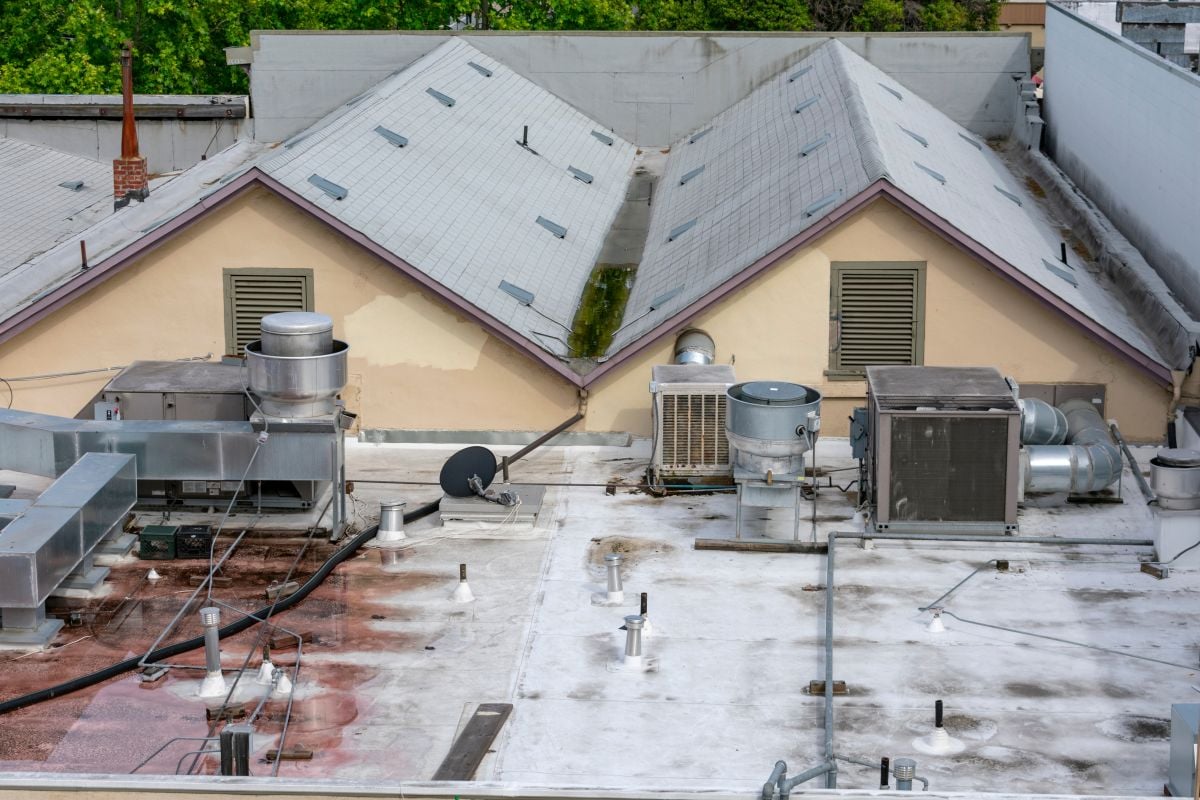
Commercial Roof Leak Detection (7 Best Methods Explained)
Commercial roof leak detection is critical for protecting your building, inventory, and daily operations from costly water damage. Even small leaks can lead to insulation failure, mold growth, electrical hazards, and structural deterioration if left untreated. For commercial property owners, understanding the most effective leak detection methods helps prevent downtime and avoid expensive emergency repairs.
- Protects assets: Early detection prevents damage to equipment and interior systems.
- Reduces repair costs: Identifying leaks early limits structural impact.
- Minimizes business disruption: Fast action keeps operations running smoothly.
Why Leak Detection Is Essential for Commercial Buildings

Commercial roofs cover large surface areas and often include HVAC units, skylights, drains, and multiple seams. These features create potential entry points for water, especially in Texas climates where heavy rain and high humidity are common. In Lufkin and surrounding areas, sudden storms can expose weaknesses that may not be visible from the ground.
Leaks are not always directly above visible water stains. Water can travel beneath membranes and insulation layers before showing inside the building. That is why professional commercial roof leak detection is essential for accurate diagnosis and long-term solutions.
7 Best Commercial Roof Leak Detection Methods
Different roofing systems require different detection approaches. The following seven methods are commonly used by professionals to locate leaks efficiently and accurately.
1. Visual Roof Inspection
A detailed surface inspection is often the first step in identifying leak sources. Experienced contractors examine seams, flashing, penetrations, and drainage systems for visible signs of failure.
- Membrane damage: Cracks, punctures, or blistering may allow water entry.
- Seam separation: Lifted or deteriorated seams are common leak points.
- Flashing gaps: Loose metal or sealant around equipment can compromise waterproofing.
While visual inspections may not detect hidden moisture, they often identify obvious vulnerabilities.
2. Infrared Thermal Imaging
Infrared scanning is one of the most advanced commercial roof leak detection tools available. This method uses thermal cameras to identify temperature differences caused by trapped moisture beneath the roof surface.
- Non-invasive testing: No damage to roofing materials during inspection.
- Large-area scanning: Ideal for expansive commercial roofs.
- Precise identification: Highlights moisture patterns invisible to the naked eye.
Infrared imaging is particularly effective after sunset when temperature variations are more noticeable.
3. Electronic Leak Detection
Electronic leak detection uses low-voltage electrical currents to identify breaches in the roofing membrane.
- Accurate pinpointing: Detects even small membrane penetrations.
- Suitable for flat roofs: Works well with TPO, PVC, and EPDM systems.
- Minimal disruption: Fast testing process for active commercial buildings.
This method is highly effective for locating hard-to-find leaks in single-ply systems.
4. Flood Testing
Flood testing is used to confirm suspected leak locations by temporarily holding water on a section of the roof.
- Controlled water exposure: Identifies active leak pathways.
- Segmented testing: Divides roof areas to narrow down problem spots.
- Verification method: Often used after initial detection techniques.
Flood testing must be carefully managed to avoid overloading structural components.
5. Core Sampling

Core sampling involves removing a small section of roofing material to evaluate moisture beneath the surface.
- Insulation assessment: Determines whether water has saturated layers.
- Structural evaluation: Reveals decking condition.
- Repair planning: Helps decide between localized repair or full replacement.
Although slightly invasive, this method provides valuable insight into the roof’s internal condition.
6. Smoke Testing
Smoke testing is used to detect leaks around penetrations and flashing areas.
- Pressurized smoke release: Reveals airflow through gaps.
- Flashing verification: Identifies compromised seals.
- Efficient testing: Ideal for buildings with complex rooftop layouts.
This technique helps locate hidden entry points that visual inspections may miss.
7. Moisture Meter Testing
Moisture meters measure dampness levels within roofing materials.
- Quick readings: Provides instant moisture level data.
- Targeted testing: Confirms suspected leak zones.
- Non-destructive option: Minimal disruption to roofing materials.
Moisture meters are often used alongside infrared or visual inspections for confirmation.
Common Causes of Commercial Roof Leaks
Understanding the root cause of leaks helps prevent recurrence after detection.
- Aging membranes: Materials lose flexibility over time.
- Improper installation: Poor seam welding or flashing work.
- Clogged drainage systems: Standing water increases membrane stress.
- Foot traffic damage: Maintenance crews can puncture membranes.
- Storm impact: Wind-driven debris or heavy rainfall.
In Lufkin and surrounding areas, high humidity and storm activity increase the likelihood of seam deterioration and drainage-related issues.
When Should You Schedule Leak Detection?
Leak detection should not wait until water appears inside the building. Commercial property owners should schedule professional evaluations:
- After major storms: High winds and heavy rain can loosen seams.
- If interior stains appear: Early action prevents structural damage.
- When energy costs rise unexpectedly: Wet insulation reduces efficiency.
- As part of routine maintenance: Biannual assessments reduce emergency repairs.
Proactive detection reduces repair costs and extends roof lifespan.
Benefits of Early Leak Detection

Timely commercial roof leak detection offers measurable financial and operational advantages.
- Reduced repair scope: Small patches instead of widespread restoration.
- Extended roof life: Protects insulation and structural components.
- Lower liability risk: Prevents slip hazards and electrical issues.
- Improved energy efficiency: Dry insulation maintains thermal performance.
For commercial buildings, preventing interior damage is far less expensive than repairing it.
Protect Your Commercial Property With Accurate Detection
Commercial roof leak detection is an essential part of responsible property management. Using advanced tools such as infrared imaging, electronic testing, and moisture detection ensures leaks are located accurately and repaired efficiently.
Commercial property owners in Lufkin and surrounding areas trust M&M Roofing for professional leak detection, repair, and maintenance services. Our experienced team uses proven methods to identify issues quickly and recommend cost-effective solutions. Contact M&M Roofing today to schedule your free evaluation and protect your commercial roof from hidden damage before it impacts your business.
