
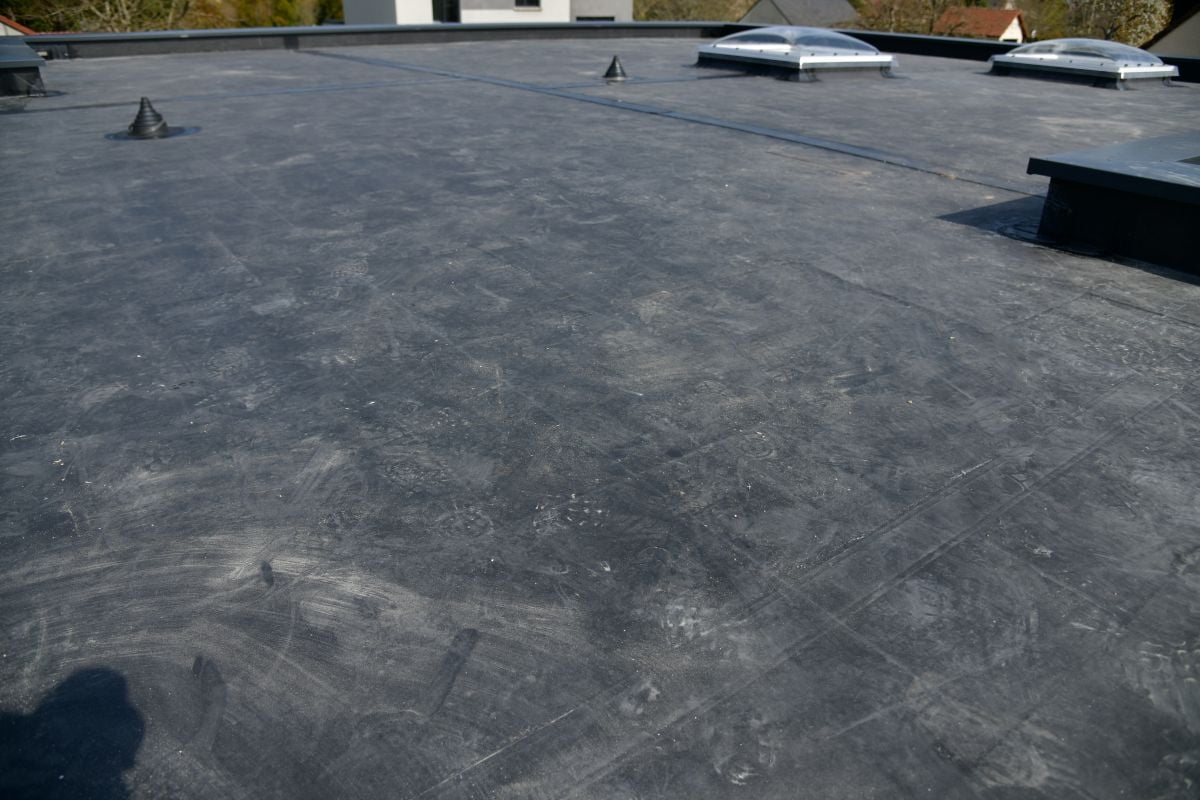
What Is EPDM Flat Roof? (7 Pros, Cons & Maintenance Tips)
An EPDM flat roof is a durable rubber roofing system widely used on commercial buildings across Texas. Known for its flexibility, cost efficiency, and weather resistance, EPDM has been a trusted solution for low-slope commercial roofing systems for decades. For commercial property owners evaluating long-term roofing investments, understanding the advantages, drawbacks, and maintenance needs of EPDM is essential for protecting assets and controlling operational costs.
- Proven durability: EPDM performs reliably in heat, rain, and fluctuating temperatures.
- Cost-effective option: Typically more affordable than PVC and some metal systems.
- Flexible installation: Ideal for large, low-slope commercial roof designs.

What Is an EPDM Flat Roof?
EPDM stands for Ethylene Propylene Diene Monomer, a synthetic rubber membrane specifically engineered for flat and low-slope commercial roofs. It is manufactured in large rolls and installed using fully adhered, mechanically fastened, or ballasted systems depending on the building’s structure and performance requirements. Seams are sealed with adhesive or specialized tape to create a continuous waterproof barrier.
In Marshall and surrounding areas, EPDM roofing is commonly installed on warehouses, office complexes, retail centers, and industrial facilities. Its elasticity allows it to expand and contract without cracking, making it well-suited for Texas temperature fluctuations and structural movement common in large commercial buildings.
7 Pros, Cons & Maintenance Insights
Before selecting EPDM for a commercial facility, property owners should weigh both performance benefits and potential limitations. The following insights help determine whether EPDM aligns with your building’s size, energy goals, and maintenance expectations.
1. Pro: Excellent Flexibility
One of EPDM’s strongest advantages is its elasticity. Large commercial roofs naturally expand and contract due to temperature shifts, and rigid materials can crack under that stress. EPDM’s rubber composition adapts to movement without compromising its waterproof integrity.
- Temperature adaptability: Expands in heat and contracts in cooler weather without splitting.
- Crack resistance: Less prone to structural fractures compared to rigid membranes.
- Long-term stability: Maintains performance even after years of sun exposure.
For commercial properties in Texas, this flexibility helps prevent premature membrane failure.
2. Pro: Long Lifespan
A professionally installed EPDM flat roof can last 25 to 30 years or longer with proper maintenance. Thickness options allow contractors to tailor durability based on building needs and traffic levels.
- Heavy-duty membrane options: Thicker materials increase resistance to wear.
- Weather performance: Holds up under heavy rain and UV exposure.
- Repairable surface: Localized damage can be patched without full replacement.
For commercial property owners focused on long-term capital planning, EPDM provides predictable service life.
3. Pro: Affordable Installation
Budget considerations are often a deciding factor in commercial roofing decisions. EPDM is typically more affordable upfront than PVC or standing seam metal systems.
- Lower material cost: Rubber membranes cost less than thermoplastic alternatives.
- Simplified installation: Requires fewer specialized tools than heat-welded systems.
- Efficient labor process: Installation is straightforward for experienced crews.
For large commercial facilities in Marshall and surrounding areas, these cost savings can be significant.

4. Con: Heat Absorption
Traditional EPDM membranes are black, meaning they absorb rather than reflect sunlight. In Texas climates, this can increase rooftop temperatures.
- Higher surface temperatures: Black membranes retain heat during long summers.
- Energy impact: Increased heat transfer may raise cooling demands.
- Reflective coating options: White coatings can improve energy efficiency.
For facilities with high cooling costs, property owners should consider insulation upgrades or reflective coatings.
5. Con: Seam Vulnerability
Unlike TPO or PVC systems that use heat-welded seams, EPDM relies on adhesive or seam tape technology. While effective, these seams require consistent monitoring.
- Adhesive aging: Bond strength may weaken over time.
- Leak risk at seams: Separation can create water entry points if neglected.
- Routine inspections required: Preventive maintenance reduces failure risk.
Professional installation and scheduled inspections greatly reduce seam-related issues.
6. Pro: Easy Repairs
EPDM is widely regarded as one of the easiest commercial roofing systems to repair. This can minimize operational disruptions for businesses.
- Simple patching process: Damaged sections can be sealed with compatible rubber materials.
- Minimal downtime: Repairs are quick and cost-effective.
- Extended roof life: Timely maintenance prevents structural damage.
For commercial facilities that cannot afford extended closures, repair flexibility is a major benefit.
7. Con: Puncture Risk
Although durable, EPDM can be susceptible to punctures from heavy foot traffic or debris.
- Equipment servicing wear: HVAC maintenance traffic can cause scuffing.
- Storm debris damage: Branches or sharp objects may penetrate the membrane.
- Walkway pad solutions: Protective pads help prevent high-traffic wear.
Property owners should control roof access and install protective pathways to preserve membrane integrity.
Maintenance Tips for EPDM Commercial Roofs
Routine maintenance ensures your EPDM flat roof continues performing efficiently year-round.
- Schedule biannual inspections: Check seams, flashing, and drainage systems.
- Maintain proper drainage: Clear scuppers and drains to prevent ponding water.
- Remove debris regularly: Organic buildup can accelerate membrane wear.
- Monitor seams and flashing: Early resealing prevents water intrusion.
- Document maintenance activity: Records protect warranty coverage and support budgeting.
Commercial properties in Marshall and surrounding areas benefit from proactive inspection programs that extend roof lifespan by several years.

How EPDM Compares to Other Commercial Roofing Systems
| Feature | EPDM | TPO | PVC |
| Lifespan | 25–30 years | 20–30 years | 25–35 years |
| Energy Efficiency | Moderate | High | High |
| Seam Type | Adhesive/Tape | Heat-welded | Heat-welded |
| Cost | Lower | Moderate | Higher |
| Repair Ease | Easy | Moderate | Moderate |
EPDM remains one of the most budget-friendly commercial roofing materials available. However, thermoplastic systems may offer improved energy performance in extremely hot climates.
Is EPDM Right for Your Commercial Property?
An EPDM flat roof is an excellent option for commercial property owners seeking durability, flexibility, and cost control. It performs especially well on expansive, low-slope structures such as warehouses and distribution centers.
Property owners in Marshall and surrounding areas should evaluate energy efficiency goals alongside upfront costs. Combining EPDM with proper insulation or reflective coatings can improve performance in Texas heat while maintaining affordability.
Protect Your Commercial Investment
An EPDM flat roof provides a reliable, cost-effective solution for commercial buildings across Texas. With professional installation and routine maintenance, it delivers decades of waterproof protection while allowing for easy repairs and manageable upkeep.
Commercial property owners in Marshall and surrounding areas trust M&M Roofing for expert flat roof installation, repair, and maintenance services. Our experienced team understands the demands of large-scale roofing systems and delivers solutions tailored to your building’s needs. Contact M&M Roofing today for your free estimate and discover whether EPDM is the right long-term investment for your commercial property.
