Gutter Guard Installation: 6 Types Compared & How to Choose the Right One for Your Home
A gutter guard installation is the easiest way to stop spending half your weekends on a ladder pulling leaves out of your gutters. But not all gutter guards are created equal, and the cheap ones you’ll find at the big box store often cause more problems than they solve. Knowing the six main types, what they actually do well, and what they cost will save you from buying the wrong thing twice.
Here’s what you’ll learn in this guide:
- The 6 main types of gutter guards: What each one is, what it costs, and what it’s actually good at.
- The pros and cons in plain English: What works in real homes, not just in marketing photos.
- How to pick the right one for your house: Which type fits your roof, your trees, and your budget.
Why Gutter Guards Are Worth Considering
Cleaning gutters twice a year is one of those chores most homeowners put off until something goes wrong. The problem is, when gutters clog, the damage can run into the thousands. Gutter guards aren’t magic, but the right ones cut your cleaning to a fraction of what it was and keep the worst of the damage from happening.
What Clogged Gutters Actually Cost You
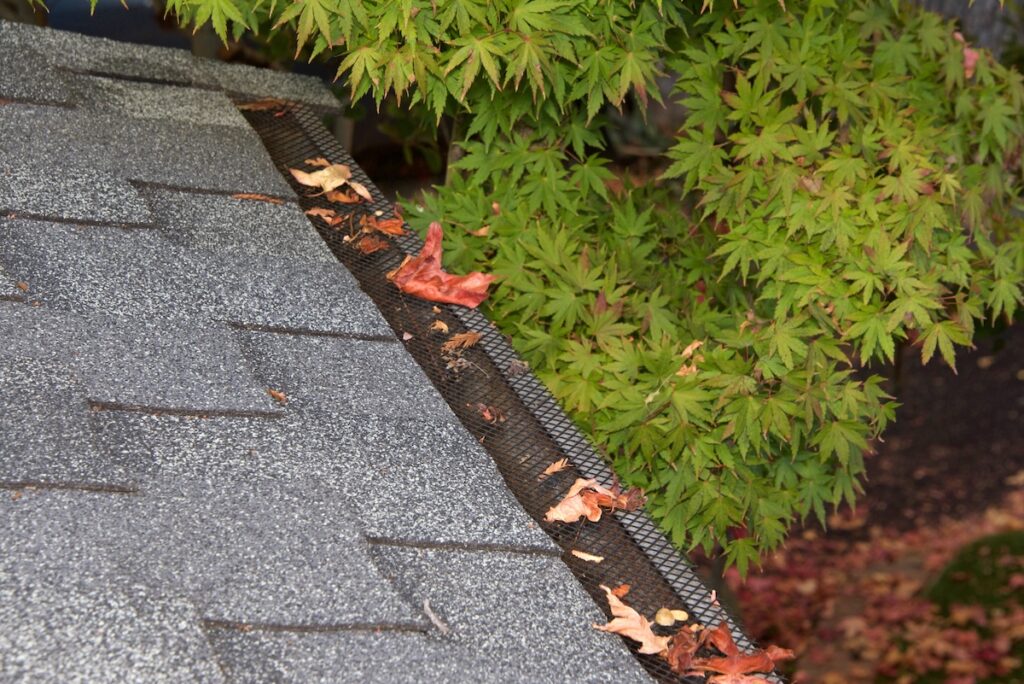
Clogged gutters cause some of the most expensive water damage in residential homes. Gutters that overflow because they’re full of leaves are one of the biggest causes of that damage. The water can’t get to the downspout, so it spills over the edge, runs down your siding, and pools against your foundation. Homeowners in Carthage and surrounding areas with a lot of pine trees or hardwoods often deal with this problem several times a year.
- Foundation damage: Water pooling next to the house cracks slabs and shifts piers.
- Siding rot: Overflow runs down the walls and works into wood trim.
- Fascia damage: Wet, heavy gutters pull away from the house and rot the wood behind them.
- Landscape erosion: Mulch beds and flower beds get washed out by concentrated runoff.
How Much Time Gutter Guards Really Save
Most homeowners clean their gutters two to four times a year, and each cleaning takes a few hours on a ladder. Good gutter guards cut that down to once a year or less, and a quick rinse with the hose handles most of it. Bad gutter guards can actually make cleaning harder because debris piles up on top of them instead of inside. That’s why the type you choose matters more than whether you install them at all.
- Without guards: Two to four cleanings per year for most homes.
- With good guards: Often once a year or less.
- With cheap guards: Sometimes more work than no guards at all.
- Time saved: A weekend or two a year, plus zero ladder time.
6 Main Types of Gutter Guards Compared
Here are the six types you’ll see when you start shopping, ranked roughly from least expensive to most. Each one works in some situations and falls short in others.
1. What Are Mesh Screen Gutter Guards?
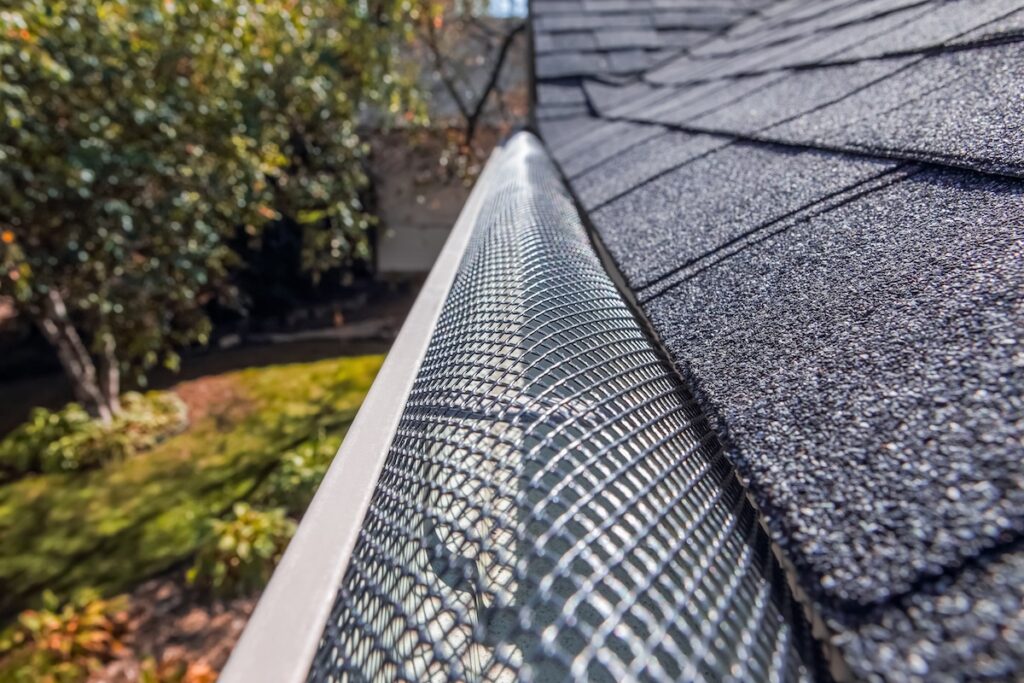
Mesh screen guards are flat panels of metal or plastic mesh that sit on top of your gutters. They’re the most common type sold at hardware stores and one of the cheapest options at $1 to $3 per linear foot. The mesh keeps out leaves and large debris, but smaller stuff like pine needles, shingle grit, and seed pods can work through the holes or pile up on top. They’re a step up from no guards at all, but they’re not a long-term solution for homes with a lot of trees overhead.
- Cost: $1 to $3 per linear foot installed.
- Best for: Homes with mostly large leaves and not a lot of fine debris.
- Weak spot: Pine needles, seed pods, and small debris.
- Lifespan: 5 to 10 years before they sag or rust.
2. What Are Micro-Mesh Gutter Guards?
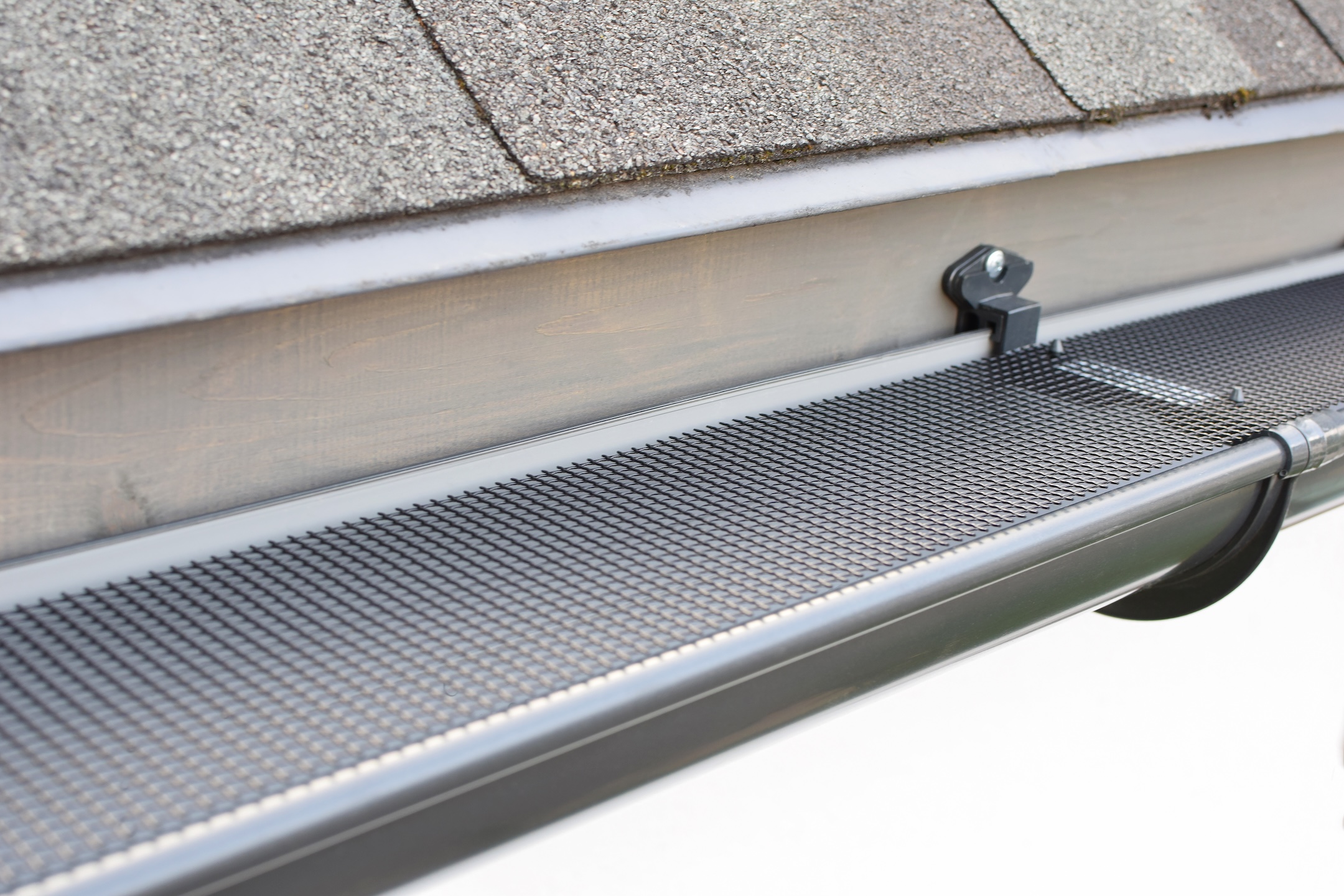
Micro-mesh guards use a much finer stainless steel mesh that keeps out almost everything, including pine needles and shingle grit. They’re the gold standard for performance and run $5 to $12 per linear foot installed. The fine mesh sits on top of a sturdy aluminum frame, so they hold their shape and don’t sag like cheaper screens. They’re a real “set it and forget it” option for most homes, though they still need a quick rinse once a year. If you’ve got pine trees overhead or you’re tired of climbing a ladder, this is the type most professionals recommend.
- Cost: $5 to $12 per linear foot installed.
- Best for: Almost any home, especially those with pine trees or heavy debris.
- Strength: Keeps out almost all debris, including fine particles.
- Lifespan: 20-plus years on quality stainless steel versions.
3. What Are Foam Insert Gutter Guards?
Foam inserts are long blocks of foam that you push down into your gutter. Water flows through the foam while debris stays on top, where it dries out and blows away. They run about $2 to $4 per linear foot installed and are easy to DIY. The catch is they’re not great in heavy-debris areas, the foam degrades from sun exposure over time, and they can hold moisture that helps mold and mildew grow inside the gutter. They work okay as a budget option for low-debris homes but rarely last more than a few years.
- Cost: $2 to $4 per linear foot installed.
- Best for: Light-debris homes on a tight budget.
- Weak spot: UV breakdown and moisture retention.
- Lifespan: 2 to 5 years before they break down.
4. What Are Brush Gutter Guards?
Brush guards look like giant bottle brushes that sit inside your gutter. The bristles catch debris while water flows around them. They run about $3 to $5 per linear foot installed and are simple to drop in yourself. The downside is debris gets caught in the bristles and has to be pulled out by hand, which takes about as long as cleaning the gutter the old way. They work alright for medium-debris homes but don’t really solve the cleaning problem, they just relocate it.
- Cost: $3 to $5 per linear foot installed.
- Best for: Light to medium-debris homes that want a low-cost option.
- Weak spot: Debris gets stuck in the bristles and has to be removed.
- Lifespan: 5 to 10 years depending on UV exposure.
5. What Are Reverse Curve Gutter Guards?
Reverse curve guards (sometimes called surface tension guards) are solid covers that curve over the front edge of your gutter. Water clings to the curve and flows into a narrow slot, while leaves slide off the front and fall to the ground. They run $6 to $10 per linear foot installed and work well in steady rain. In heavy downpours, water can sometimes overshoot the curve and miss the gutter entirely. They also tend to get sticky tree sap, pollen, and shingle grit buildup on the curved surface, which can mess with how water flows over time.
- Cost: $6 to $10 per linear foot installed.
- Best for: Homes with leafy trees and steady, moderate rainfall.
- Weak spot: Heavy downpours can overshoot the curve.
- Lifespan: 15 to 25 years on quality versions.
6. What Are Perforated Solid Cover Gutter Guards?
Perforated covers are solid metal sheets with small holes or slits punched in them that let water through while blocking debris. They run $4 to $8 per linear foot installed and look clean from the ground because they hide the gutter entirely. The holes can clog with fine debris over time, especially shingle grit, and unclogging them often means taking the cover off. They’re a middle-ground option that looks good but doesn’t always perform as well as micro-mesh in heavy-debris environments.
- Cost: $4 to $8 per linear foot installed.
- Best for: Homes that want a clean look and have moderate debris.
- Weak spot: Small holes can clog with shingle grit and pollen.
- Lifespan: 15 to 20 years for quality aluminum versions.
How to Choose the Right Gutter Guard for Your Home
The best gutter guard is the one that fits your house, your trees, and your budget. Here’s how to think about it.
What Should You Consider Before Buying?
Start with what’s actually falling onto your roof. If you’ve got pine trees, you need fine mesh. If you’ve got hardwoods that drop big leaves, almost any guard will help. If your roof is steep or you’ve got multiple stories, professional installation is worth the cost because a botched DIY job can void your gutter warranty. Budget matters too — cheap guards on a house with heavy debris will frustrate you within a year. Spend a little more upfront and save the headache.
- Trees overhead: Pine needles need micro-mesh. Big leaves work with almost any type.
- Roof height: Two-story or steep roofs are worth a pro install.
- Climate: Heavy rainfall favors mesh styles over reverse curve.
- Budget: Cheap guards on bad homes cost more long-term than quality guards do upfront.
Should You DIY or Hire a Pro for Gutter Guard Installation?
Some types are DIY-friendly and some really aren’t. Foam inserts and brush guards drop right in and most homeowners can install them in an afternoon. Mesh screens are a little harder because they need to be cut to fit and attached properly. Micro-mesh, reverse curve, and perforated cover systems usually call for professional installation because they integrate with your gutter and roof in ways that affect performance and warranty. If you’ve got a one-story home and basic guards, give it a try. Anything bigger, and a pro is the smart move.
- DIY-friendly: Foam inserts and brush guards on single-story homes.
- Pro install: Micro-mesh, reverse curve, and perforated systems.
- Safety: Never DIY on a two-story or steeply pitched roof.
- Warranty: Some manufacturer warranties require professional installation.
Frequently Asked Questions About Gutter Guard Installation
Do gutter guards really work?
Yes, the good ones really do work. Micro-mesh and quality reverse-curve systems can cut your cleaning to once a year or less. Cheap mesh and foam inserts work okay in light-debris environments but often disappoint in homes with lots of trees.
How much does professional gutter guard installation cost?
Professional gutter guard installation runs $7 to $15 per linear foot for most quality systems, including labor. A typical single-story home in Carthage and surrounding areas with about 150 to 200 linear feet of gutters runs $1,000 to $3,000 installed.
Will gutter guards damage my roof?
Quality gutter guards installed properly will not damage your roof. The risk comes from cheap guards that slide under your shingles and lift them, or from poor installation that voids your shingle warranty. Always check that the installer doesn’t have to disturb your shingles.
Do I still need to clean my gutters if I have guards?
Yes, but much less often. Good gutter guards still need a yearly rinse with the hose to clear fine grit and pollen off the surface. They take cleaning from a multi-hour ladder job down to about 20 minutes from the ground.
Can gutter guards handle heavy rain?
Quality micro-mesh and perforated systems handle heavy rain just fine. Reverse curve guards can sometimes overshoot during downpours, and foam or cheap mesh can get overwhelmed. If you live in an area with frequent heavy rainfall, micro-mesh is the safest bet.
Will gutter guards lower my homeowners insurance?
Sometimes. Some insurance companies offer small discounts for proactive maintenance, and a well-protected gutter system makes water damage claims less likely. It’s worth a quick call to your insurance agent to ask.
Why M&M Roofing Is Your Trusted Partner for Gutter Guard Installation
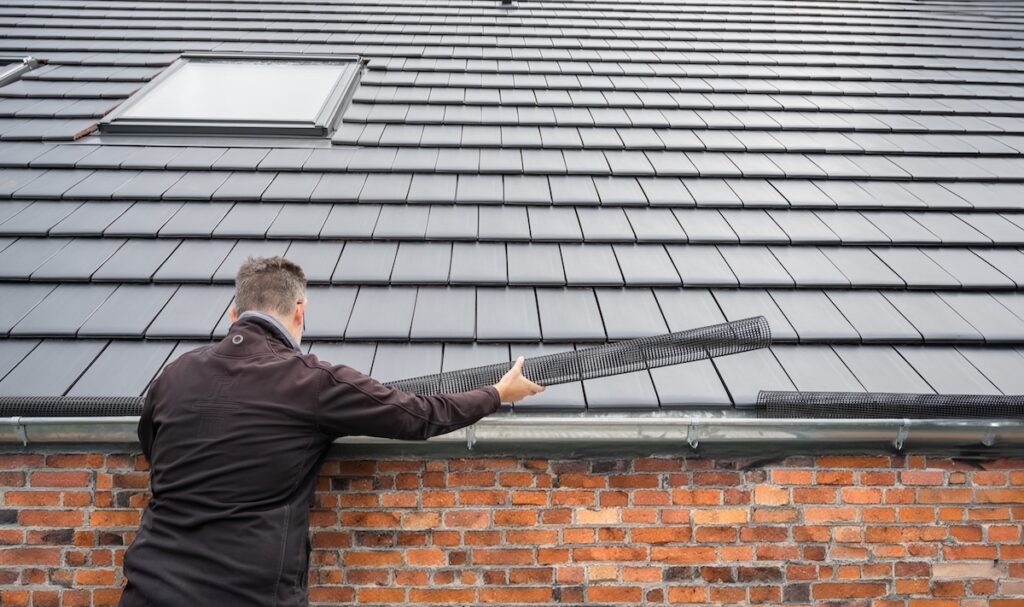
The right gutter guard installation pays for itself within a few years in cleaning costs and avoided water damage. The wrong one is money you’ll wish you spent on something else. M&M Roofing serves homeowners in Carthage and surrounding areas with honest evaluations of which gutter guard type actually fits your home, professional installation that protects your roof warranty, and durable seamless gutters built to handle East Texas weather. Every job is backed by available warranties, financing options, and our commitment to building the strongest shell for your home.
If you’re tired of cleaning your gutters every few months or worried about water damage to your foundation, contact M&M Roofing today for a free, no-obligation evaluation. Let our team help you figure out which gutter guard type makes sense for your house, your trees, and your budget.
