
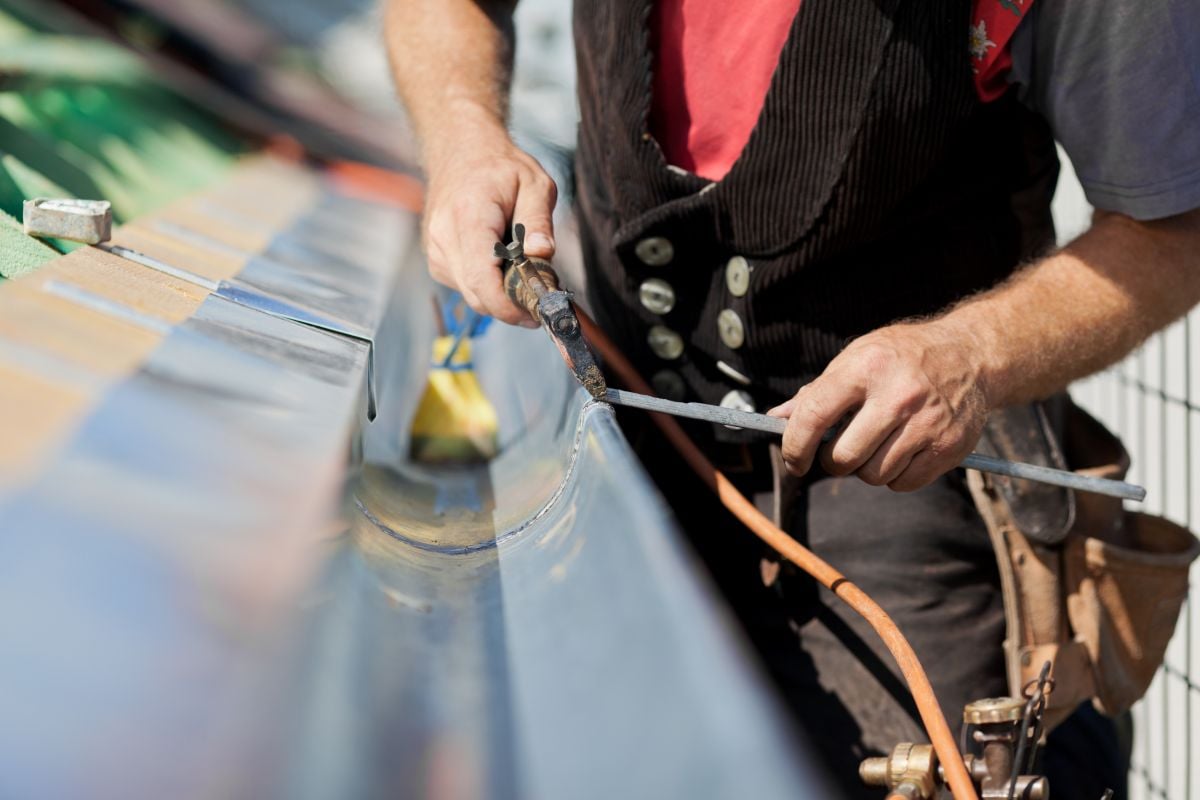
How Long Do Gutters Last? The Lifespan of 4 Popular Gutter Types & When to Replace Them
If you have ever wondered “how long do gutters last on a typical home”, the honest answer is that it depends almost entirely on the material you choose, the climate they have to handle, and how well they are maintained. A budget vinyl system can fail in 10 years, while a quality copper installation can outlive the homeowner. Knowing where each material lands on that spectrum, and what warning signs mean replacement is near, helps you avoid the trap of patching an aging system long past the point where replacement is the smarter spend.
Here is what you will learn in this guide:
- Lifespan ranges for 4 popular gutter materials: Realistic year ranges for aluminum, copper, galvanized steel, and vinyl gutters.
- The 6 warning signs of end-of-life gutters: Specific symptoms that mean it’s time to replace, not repair.
- Cost expectations and durability factors: What drives lifespan up or down and how to budget for replacement.
Why Gutter Lifespan Matters for Homeowners
Gutter lifespan directly affects how often you face replacement costs, how exposed your home is to water damage during the system’s decline, and how much you should be willing to spend on repairs as the system ages. Gutters that fail are not just an inconvenience, they are the leading cause of foundation, fascia, and siding damage in residential homes.
How Failing Gutters Damage the Rest of Your Home
Failing gutters allow roof runoff to spill along the foundation, saturate clay soils, and work into siding seams, soffit wood, and fascia boards within a single rainy season. When sectional joints leak, hangers loosen, or rust perforates the trough, water bypasses the system entirely and travels paths it was never meant to follow. Homeowners in Nacogdoches and surrounding areas often see the consequences as cracked slabs, rotted soffit, peeling paint, and dark vertical streaks on siding directly below failure points. The cost of those secondary repairs almost always exceeds the cost of replacing the gutters themselves, which is why staying ahead of end-of-life decline matters.
- Foundation damage: Saturated soils cause slab movement, cracks, and pier-and-beam settlement.
- Fascia and soffit rot: Chronic overflow saturates wood trim and creates entry points for pests.
- Siding stains: Vertical streaks below joints signal recurring overflow and material breakdown.
- Landscape erosion: Concentrated runoff washes out mulch, drowns plant roots, and undermines pathways.
How Climate and Maintenance Shape Gutter Lifespan

Climate and maintenance habits often matter more than the gutter material itself in determining real-world lifespan. Heavy rainfall, prolonged sun exposure, hailstorms, and constant organic debris from pines and hardwoods all shorten gutter life, while consistent cleaning and prompt repair extend it dramatically. According to the National Association of Home Builders Life Expectancy of Home Components study, gutters have a life expectancy of more than 50 years if made of copper and 20 years if made of aluminum, with copper downspouts lasting 100 years or more and aluminum downspouts around 30 years. In practice, a well-maintained system in a mild climate frequently outlasts the upper end of its rated range, while a neglected system in a harsh one may fail well before the lower end.
- Rainfall volume: Sustained 40-plus inches a year accelerates corrosion and seam fatigue.
- Sun exposure: UV degrades vinyl, dries sealants, and fades painted finishes faster.
- Debris load: Pine needles and oak leaves trap moisture and accelerate corrosion when not cleaned.
- Maintenance habits: Twice-yearly cleaning and prompt seam repair often double effective lifespan.
4 Popular Gutter Types and Their Lifespans
The four gutter materials that dominate the residential market today are aluminum, copper, galvanized steel, and vinyl. Each has a distinct lifespan range, cost profile, and set of strengths and weaknesses worth understanding before replacement.
1. How Long Do Aluminum Gutters Last?
Aluminum gutters typically last 20 to 30 years, with well-maintained seamless aluminum systems sometimes reaching 35 years or more. Aluminum is the most popular gutter material in the United States because it offers an excellent balance of cost, weight, corrosion resistance, and ease of installation in seamless form. Standard installed cost runs $6 to $13 per linear foot, and aluminum holds painted finishes well for two decades or longer. The main lifespan limiters are dent damage from hail and ladder contact, sealant failure at end caps and outlets, and corrosion in coastal salt-air environments, which is rarely a factor in East Texas.
- Typical lifespan: 20 to 30 years, sometimes 35-plus with seamless construction and good maintenance.
- Installed cost range: $6 to $13 per linear foot for standard 5-inch K-style.
- Best feature: Lightweight, corrosion-resistant, and available in many colors.
- Common failure mode: Dent damage and sealant failure at seams, end caps, and outlets.
2. How Long Do Copper Gutters Last?
Copper gutters last 50 years or more, with copper downspouts often reaching 100 years on well-maintained homes. Copper is the premium gutter material, prized for both its exceptional longevity and the warm patina it develops over the first decade of exposure. The trade-off is cost: installed copper gutters typically run $25 to $40 per linear foot, four to five times the price of aluminum, and they require professional installation by a contractor experienced with soldered joints. Theft has become a real consideration in some areas because of copper’s scrap value, but secure mounting and visible runs reduce the risk substantially.
- Typical lifespan: 50-plus years, with downspouts often lasting 100 years.
- Installed cost range: $25 to $40 per linear foot for half-round or K-style copper.
- Best feature: Unmatched durability, no painting required, and a distinctive aesthetic.
- Common failure mode: Rare in normal use; soldered joints can weaken over many decades.
3. How Long Do Galvanized Steel Gutters Last?
Galvanized steel gutters typically last 15 to 25 years, with the lower end of that range more common in humid, high-rainfall climates where the protective zinc coating wears through faster. Steel offers more impact resistance than aluminum and was the dominant residential gutter material for much of the 20th century, which is why so many older homes in Nacogdoches and surrounding areas still have steel systems in place. Installed cost runs $9 to $20 per linear foot. Once the galvanized coating fails, rust spreads quickly along seams and the bottom of the trough, and at that point repair becomes a holding action rather than a fix.
- Typical lifespan: 15 to 25 years depending on climate and coating quality.
- Installed cost range: $9 to $20 per linear foot for standard galvanized K-style.
- Best feature: Stronger and more dent-resistant than aluminum or vinyl.
- Common failure mode: Rust through after the zinc coating wears out, especially at seams and bottoms.
4. How Long Do Vinyl Gutters Last?

Vinyl gutters typically last 10 to 20 years, with the upper end reserved for systems in mild climates and the lower end common where summers are hot and sun exposure is intense. Vinyl is the cheapest gutter material at $3 to $6 per linear foot installed and is popular for DIY installations because the sectional pieces snap together without specialized tools. The cost savings come with real trade-offs: vinyl becomes brittle under prolonged UV exposure, cracks under freeze-thaw stress, and warps under heavy debris loads. For homeowners planning to stay in their home long term, the shorter replacement cycle often offsets the upfront savings.
- Typical lifespan: 10 to 20 years depending on climate and sun exposure.
- Installed cost range: $3 to $6 per linear foot for sectional vinyl.
- Best feature: Lowest upfront cost and easiest DIY installation.
- Common failure mode: UV-related cracking, warping, and joint separation under heat stress.
When to Replace Your Gutters: 6 Warning Signs
Knowing when a gutter system has reached the end of its useful life is just as important as knowing how long it should have lasted in the first place. The warning signs below are the ones that consistently point to replacement rather than repair.
How Do You Know Your Gutters Need Replacement?
You know your gutters need replacement when you see multiple problem areas at the same time, or when a single major failure like widespread rust or chronic sagging affects the whole system. Isolated issues like a single leaky seam or one clogged downspout usually call for repair, not replacement, but stacked symptoms tell a different story. When two or more of the warning signs below appear on the same system, or when annual repair costs approach 50 percent of replacement cost, it is time to plan for new gutters. Most homes in Nacogdoches and surrounding areas can be re-gutted in a single day with seamless aluminum.
- Multiple seam leaks: Three or more leaking joints on the same system signal end-of-life sealant and material fatigue.
- Widespread rust: Rust visible on the bottom of steel troughs typically means coating failure throughout.
- Chronic sagging: Sections that re-sag within a year of repair usually indicate fastener and fascia failure.
- Cracking or warping: Visible cracks in vinyl or warping along long runs mean material breakdown.
How Long Does Gutter Replacement Take and What Does It Cost?
Gutter replacement on a typical single-story home takes 4 to 8 hours and costs $1,500 to $4,000 for seamless aluminum, with copper and decorative profiles running significantly higher. The job involves removing the old gutters and damaged fascia, fabricating seamless aluminum sections on-site with a portable roll-former, hanging the new system with hidden hangers spaced every 24 to 36 inches, and installing new downspouts with proper discharge extensions. A reputable contractor will include disposal of the old material, sealing of all end caps and outlets, and a written warranty covering both labor and materials.
- Typical timeline: 4 to 8 hours for a single-story home with average linear footage.
- Installed cost range: $1,500 to $4,000 for seamless aluminum on a typical home.
- What’s included: Old gutter removal, fabrication, hanging, downspouts, disposal, and warranty.
- What to ask: About hanger spacing, downspout sizing, drip edge condition, and warranty terms.
Frequently Asked Questions About Gutter Lifespan

How long do seamless gutters last compared to sectional gutters?
Seamless gutters typically last 20 to 30 years in aluminum form, often outlasting sectional gutters by 5 to 10 years because they eliminate the joints where most failures begin. Sectional gutters can match seamless lifespan with diligent seam maintenance, but they require more frequent re-sealing and inspection. For most homeowners, seamless aluminum is the longer-lasting and lower-maintenance choice.
Can I extend the life of my gutters?
Yes, regular maintenance can extend gutter life by 5 to 10 years or more. Clean the gutters at least twice a year, inspect seams and hangers after major storms, repair small leaks before they become structural issues, and keep downspouts clear so water flows freely from outlet to discharge. Adding gutter guards in heavy-debris environments significantly reduces clog-related stress on the system.
How often should gutters be cleaned?
Gutters should be cleaned at least twice a year, typically once in late spring and once in late fall, with extra cleanings after major storms. Homes surrounded by pines or hardwoods often need quarterly cleaning to keep downspouts flowing. A quick visual inspection after every significant rain event catches overflow, sagging, or staining early.
When is repair better than replacement?
Repair is better than replacement when the system is younger than 15 years, has only one or two isolated problem areas, and is showing no widespread material breakdown like rust or warping. If repair costs in a single year approach 50 percent of replacement cost, replacement becomes the smarter long-term spend. Multiple stacked symptoms, especially across different parts of the system, point to replacement.
Do gutters come with a warranty?
Yes, gutter warranties typically cover materials for 20 to 50 years and labor for 1 to 10 years depending on the contractor. Aluminum and steel manufacturers commonly offer 20-year material warranties, while copper rarely needs a warranty due to its inherent durability. Always ask for warranty terms in writing and confirm whether the labor warranty is transferable if you sell the home.
Are seamless gutters worth the extra cost?
Seamless gutters are worth the extra cost for most homeowners because they significantly reduce the leak points that cause early failure in sectional systems. The upfront price difference is typically 20 to 40 percent over sectional, but the longer effective lifespan and reduced maintenance often more than offset the difference. Seamless installation requires a professional contractor with an on-site roll-former, which is the main reason DIY installs default to sectional vinyl or aluminum.
Why M&M Roofing Is Your Trusted Partner for Gutter Replacement
When the time comes to replace aging gutters, the contractor you choose matters as much as the material itself. M&M Roofing serves homeowners in Nacogdoches and surrounding areas with seamless aluminum gutter installations built to handle East Texas weather year after year, backed by available warranties, financing options, and our commitment to building the strongest shell for your home from the ridge cap to the downspout extension. Quality fabrication, proper hanger spacing, and clean discharge configuration are the difference between gutters that hit the upper end of their rated lifespan and ones that fail early.
If your gutters are showing rust, sagging, or stacked failure points, do not wait for the next storm to make the decision for you. Contact M&M Roofing today for a free, no-obligation evaluation, and let our team show you exactly where your current system stands and what replacement would look like.
