
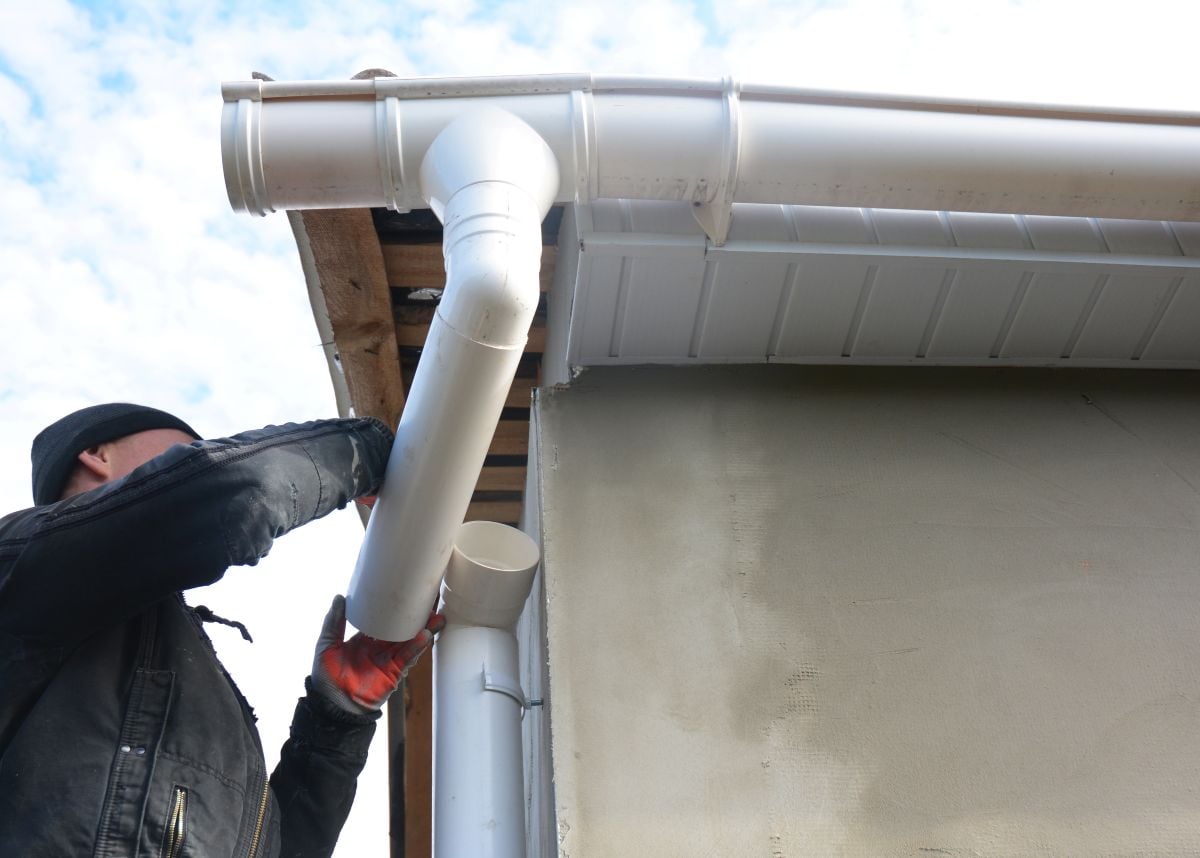
6 Common Rain Gutter Repairs Every Homeowner Should Know About
A rain gutter repair is any fix that restores a gutter system’s ability to capture roof runoff and direct it safely away from the foundation, and knowing the six most common types can save you thousands in water damage. Rain gutter problems rarely announce themselves before they cause harm. By the time most homeowners notice peeling paint, a soggy flower bed, or a stain on the fascia, the damaged gutters above have been failing for months. The good news is that almost every gutter problem falls into one of six predictable categories, and each one has a clear fix.
Here is what you will learn in this guide:
- The six most frequent gutter repairs: Specific symptoms, causes, and fixes for the issues homeowners run into year after year.
- Real cost ranges and timelines: Dollar figures and repair windows so you know what to expect before you call a contractor.
- Repair-versus-replace thresholds: Clear age, cost, and damage benchmarks that tell you which way to go.
Why Rain Gutter Repairs Matter for Texas Homes

A rain gutter system is the single most important water-management feature on the exterior of your home, and a failure anywhere in the run can compromise the whole house. Gutters route every gallon of roof runoff to controlled discharge points, and when that flow is interrupted, water finds its own path along siding, foundations, and soffits.
How Gutters Protect Your Home From Water Damage
A working rain gutter captures roof runoff at the eave and channels it through downspouts to a discharge point at least 4 to 6 feet from the foundation. A 1,500 square foot roof sheds roughly 935 gallons of water during a single inch of rain, and when gutters fail, all of that volume cascades along the wall line, saturates clay soil, and works into siding seams. Homeowners in Lufkin and surrounding areas usually see the first symptoms as peeling exterior paint, mulch washouts, and dark vertical streaks on siding directly below gutter joints. Catching damaged gutters early is the difference between a $150 sealant repair and a $5,000 fascia and foundation correction.
- Foundation protection: Proper drainage reduces hydrostatic pressure on slab and pier-and-beam foundations.
- Siding and fascia defense: Sealed seams stop the overflow that rots wood trim and stains brick or Hardie plank.
- Landscape preservation: Working downspouts prevent soil erosion and root drowning in flower beds.
- Pest deterrence: Free-flowing troughs eliminate the standing water that breeds mosquitoes, wasps, and rodents.
Why East Texas Weather Puts Gutters Under Heavy Load
East Texas gutter systems work harder than those in most parts of the country because of sustained heavy rainfall and constant organic debris. According to the Texas State Historical Association, East Texas averages roughly 44 inches of rain per year, with isolated areas topping 54 inches annually. That volume, combined with pine needle drop, oak leaf litter, hailstorms, and 60-plus mph thunderstorm gusts, repeatedly stresses every seam, hanger, and slip joint in the system.
- High annual rainfall: Sustained 40-plus inches a year accelerates corrosion and gutter sealant failure at every joint.
- Heavy organic debris: Pine needles and hardwood leaves clog troughs faster than shingle grit alone, which is why gutter guards are so popular here.
- Severe storm bursts: Short, intense downpours produce runoff volumes that overwhelm undersized 5-inch gutters.
- Hail and wind events: Spring and summer storms dent aluminum and pull old spike fasteners loose from the fascia.
6 Most Common Rain Gutter Repairs Homeowners Need
Most rain gutter repair calls fall into one of six clear categories. Knowing the symptoms, the cost, and the typical timeline for each will help you make smart decisions when you spot a problem.
1. How Do You Fix a Leaking Gutter Seam?
A leaking gutter seam is sealed by drying the joint, scraping out failed caulk, and applying a fresh bead of polyurethane or tripolymer gutter sealant on the inside of the trough. Seams and slip joints are the weakest points of any sectional gutter system because thermal expansion, contraction, and corrosion attack them first. A typical seam repair runs $75 to $200 per joint and takes under an hour, though the gutter sealant needs about 24 hours to cure fully before heavy rain. If multiple seams are leaking on the same run, switching to seamless gutters is usually the better long-term spend because they eliminate the joints altogether.
- Typical cost range: $75 to $200 per seam.
- Time to complete: 30 to 60 minutes per seam plus 24-hour sealant cure.
- Common cause: Failed old caulk, thermal cycling, or galvanic corrosion at slip joints.
- Warning sign: Brown drip stains on fascia or siding directly under a joint.
2. Why Do Gutters Sag and How Are They Re-Hung?
Sagging gutters are repaired by removing failed spikes or worn-out fasteners and installing hidden gutter hangers spaced every 24 to 36 inches into solid fascia wood. Sagging gutters start when the original fasteners pull loose from softened wood, when standing water from a clog adds hundreds of pounds of weight, or when ice or hail bends the trough out of shape. Once a rain gutter loses its proper slope of 1/16 inch per foot toward the downspout, water pools, debris collects, and the slope problem accelerates. Re-hanging typically costs $4 to $10 per linear foot, and rotted fascia behind the gutter must be replaced at the same time or the new gutter hangers will fail just as fast.
- Typical cost range: $4 to $10 per linear foot for re-hanging.
- Common culprit: Old spike-and-ferrule fasteners pulling out of softened fascia.
- Required slope: 1/16 inch of fall per linear foot toward the downspout.
- Companion repair: Fascia board replacement when rot is present behind the gutter.
3. What Causes a Clogged Downspout and How Is It Cleared?

A clogged downspout is cleared by flushing it from the top with a garden hose, snaking it from the bottom with a plumbing auger, or removing the bottom elbow to break up stubborn blockages by hand. Downspouts clog more often than the trough itself because debris funnels into a small 2×3 or 3×4 inch opening, and a single wad of wet pine needles can stop flow completely. When water cannot exit, it overflows at the nearest low point, often right above a doorway or window. After clearing, run a garden hose into the trough at the far end of the run and confirm water flows freely from the downspout outlet at full pressure.
- Typical cost range: $75 to $150 per downspout for professional clearing.
- Most common debris: Pine needles, oak leaves, shingle grit, and tennis balls.
- DIY test: Run a garden hose into the gutter and confirm full flow at the bottom outlet.
- Prevention upgrade: Install gutter guards or downspout strainers to stop debris at the source.
4. How Do You Repair a Pulled-Away Gutter?
A gutter pulling away from the house is repaired by removing failed fasteners, replacing rotted fascia, and re-securing the trough with new hidden gutter hangers driven into solid wood. This problem nearly always points to two stacked issues: long-term overflow that rotted the fascia and undersized fasteners that finally gave way. If you can see daylight between the back of the gutter and the fascia, water has been running behind the system for some time, and the wood almost certainly needs replacement before reinstalling. Expect $150 to $500 for a typical pull-away repair, more if fascia replacement, gutter apron installation, or second-story access is involved.
- Typical cost range: $150 to $500 depending on length and fascia condition.
- Root cause: Fascia rot from chronic overflow combined with aged spike fasteners.
- Signs to watch for: Visible gap behind the gutter or daylight under the drip edge.
- Pair with: A gutter apron or drip edge inspection so water is directed into the gutter, not behind it.
5. What Is the Right Way to Patch a Hole or Crack?
Small holes under one inch in aluminum gutters are patched with a matching metal patch and tripolymer gutter sealant, while larger holes call for replacing the damaged section entirely. Rust spots on older galvanized steel and stress cracks on vinyl are also common, especially on systems that have not had service in 15-plus years. A patch repair is one of the cheapest fixes at $50 to $150 per hole, but it is the repair most likely to fail again within a year if the underlying cause, like chronic ponding or heavy debris load, has not been corrected. For systems older than 20 years, replacing the affected run with seamless gutters is usually the smarter spend.
- Typical cost range: $50 to $150 per patch for small holes.
- Best patch material: Aluminum sheet bonded with tripolymer gutter sealant on aluminum gutters.
- Replace, do not patch, when: Rust has perforated multiple sections of steel gutter.
- Inspection tip: Watch for dripping during light rain, which exposes pinholes faster than a hose test.
6. How Do You Fix Improperly Pitched Gutters?
Improperly pitched gutters are corrected by removing the existing hangers, snapping a new chalk line at 1/16 inch of fall per foot toward the downspout, and re-securing the trough with new gutter hangers at the corrected slope. Standing water in a rain gutter is not just cosmetic, it is a sign the system is dropping all of its load weight on a few hangers and breeding mosquitoes and algae in the meantime. Over time, ponded water corrodes the bottom of the trough from the inside out and creates the same pinholes seen in repair number five. A re-pitch on a single run costs $100 to $300 and is one of the most cost-effective preventive repairs available.
- Correct slope: 1/16 inch of fall per linear foot toward the downspout.
- Typical cost range: $100 to $300 per run.
- Telltale sign: Standing water visible the day after a rainstorm.
- Hidden benefit: Re-pitching often extends gutter life by several years.
When to Repair Versus Replace Your Gutters

The decision between rain gutter repair and full replacement comes down to age, the number of failure points, and the math on cumulative repair costs. A few isolated issues on an otherwise solid system favor repair, while widespread problems on aging gutters point to replacement.
How Long Should Aluminum and Steel Gutters Last?
Aluminum gutters last 20 to 30 years and galvanized steel gutters last 20 to 25 years before showing widespread end-of-life symptoms like multiple seam failures, rust through, and chronic sagging. If your gutters fall inside that window with one or two isolated issues, repair is the right call. If they are at or beyond it with multiple leaking seams, sagging gutters, or rust spots, the math shifts heavily toward seamless gutters, which eliminate most seam failures from day one. Most homes in Lufkin and surrounding areas can be re-gutted in a single day with professional installation.
- Aluminum gutter lifespan: 20 to 30 years with regular cleaning.
- Galvanized steel lifespan: 20 to 25 years before corrosion takes over.
- Vinyl gutter lifespan: 10 to 20 years, less in heavy sun exposure.
- Replacement signal: Three or more separate failure points on the same system.
When Repair Costs Justify a Full Replacement
When annual rain gutter repair costs approach 50 percent of a new seamless gutters installation, replacement is the smarter long-term decision. Spending $1,500 patching a 25-year-old steel system that needs $3,500 in seamless replacement is not a saving, it is a delay. Fascia damage is the other replacement trigger: if chronic overflow has rotted the wood behind the trough on multiple runs, you will pay for that fascia work either way, and it makes sense to install fresh seamless gutters once the new wood is in place.
- 50 percent rule: Annual repair costs at half of replacement cost favor replacement.
- Fascia trigger: Multiple sections of rotted fascia behind the system.
- Storm damage: Hail or wind damage covered by insurance can offset replacement cost.
- Aesthetic upgrade: Seamless gutters in custom colors noticeably improve curb appeal.
Frequently Asked Questions About Rain Gutter Repairs
How much does a typical rain gutter repair cost?
Most single-issue gutter repairs cost $75 to $500 depending on the fix and the height of the run. Seam sealing and clog clearing fall on the lower end, while re-hanging long sections or replacing damaged gutters lands at the higher end. A whole-home seamless gutters replacement averages $1,500 to $4,000 on a typical single-story home.
How long does a rain gutter repair take?
Most rain gutter repairs are completed in 1 to 4 hours per visit, though jobs involving fascia replacement or multiple runs can take a full day. Gutter sealant cures add up to 24 hours of dry time before heavy rain. M&M Roofing typically schedules same-week service for non-emergency calls.
Can I repair my gutters myself or should I hire a pro?
Simple cleaning and small sealant patches are reasonable for a confident homeowner with the right ladder, but anything involving gutter hangers, fascia work, or two-story heights is safer and more durable with professional installation. Falls from ladders are one of the most common home-repair injuries, and improper hanger spacing is the top reason DIY repairs fail within a year.
How often should gutters be inspected and cleaned?
Gutters should be cleaned at least twice a year, typically once in late spring and once in late fall, with extra cleanings after major storms. Run a garden hose through the trough after each cleaning to confirm water flows freely from every downspout. Homes surrounded by pines or hardwoods often need quarterly cleaning unless gutter guards are installed.
Are gutter contractors required to be licensed in Texas?
Texas does not require a state-level license specifically for gutter installation, but reputable contractors carry general liability insurance and workers compensation. Always ask for proof of insurance and look for membership in industry groups like the Roofing Contractors Association of Texas. Written warranty backing on both labor and materials is another mark of a trustworthy provider.
Will homeowners insurance cover rain gutter repair?
Homeowners insurance typically covers rain gutter repair when damage results from a covered event like hail, windstorm, or fallen tree, but not from age, rust, or lack of maintenance. Document any storm damage with dated photos and request a written assessment from your roofing contractor before filing a claim. M&M Roofing regularly works with homeowners and adjusters to identify all storm-related gutter damage.
Why M&M Roofing Is Your Trusted Partner for Rain Gutter Repairs
When it comes to keeping your home dry, your foundation stable, and your fascia free of rot, the rain gutter repair team you choose matters as much as the roof above it. M&M Roofing serves homeowners in Lufkin and surrounding areas with honest evaluations, durable repairs, and seamless gutters built to handle East Texas weather year after year. Every job is backed by available warranties, financing options, and our commitment to building the strongest shell for your home from the ridge cap to the downspout extension.
If you have noticed sagging gutters, water stains on your siding, or pooling near your foundation after the last storm, do not wait for the next one. Contact M&M Roofing today for a free, no-obligation evaluation and let our team show you exactly what your home needs to stay protected through every East Texas downpour.
