
7 Signs You May Need Soffit Repair (Expert Advice)
Recognizing the need for soffit repair isn’t always easy, but catching the warning signs early can prevent major damage to your roof, attic, and home’s structure. Soffits play a key role in ventilation and moisture control, and when they fail, the consequences can quickly escalate.
In this guide, we’ll walk you through:
- Common signs of soffit damage every Texas homeowner should know
- Why soffits matter to your roofing system
- When to call in an expert for repairs or replacement
Let’s take a closer look at how your soffits function and what to watch for when things start to go wrong.
🤔 What Is a Soffit, and Why Is It Important?
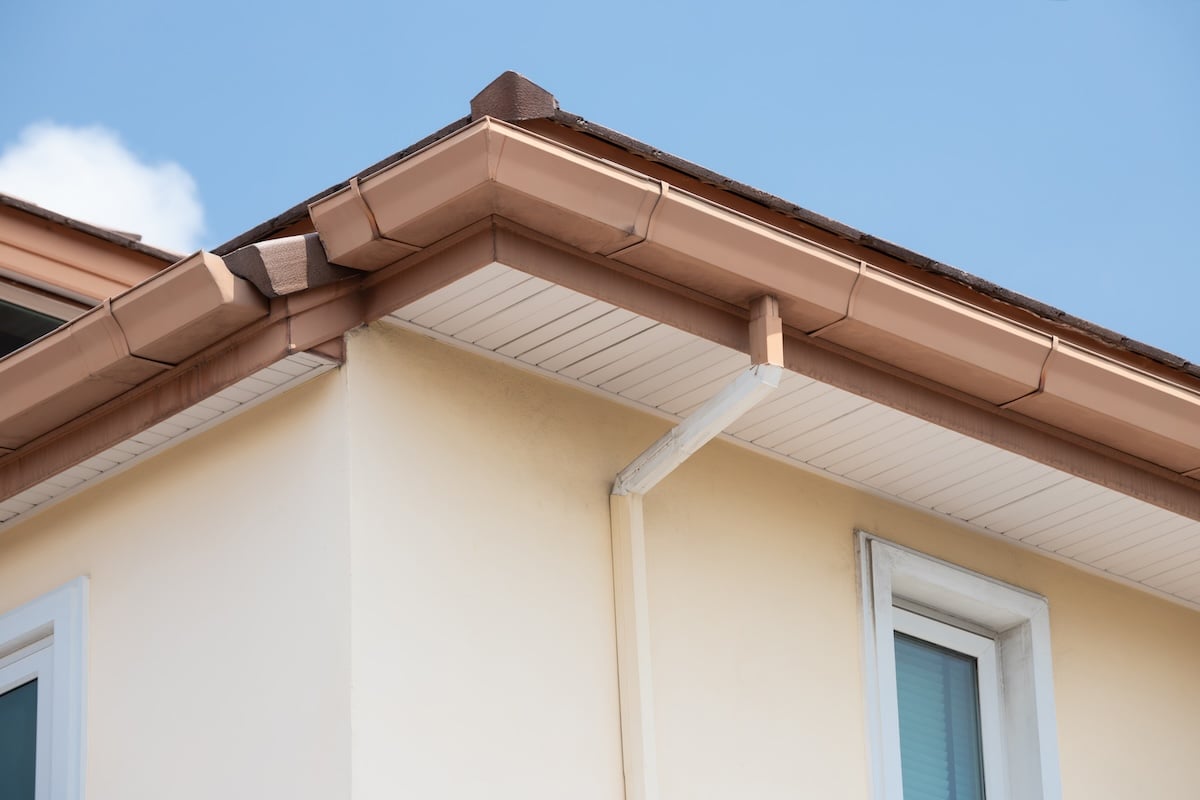
The soffit is the exposed underside of your roof’s overhang, usually found beneath the eaves. In most homes, it includes small vents to promote airflow into the attic and prevent moisture buildup.
Here’s what a healthy soffit does:
- Provides attic ventilation: Allows fresh air in, which helps regulate temperature and moisture.
- Protects the rafters: Shields your home’s structure from rain, pests, and humidity.
- Adds curb appeal: Offers a clean, finished look to your roofline.
When soffits deteriorate or become damaged, it can lead to mold, pest infestations, wood rot, or even structural damage, especially in humid climates like Texas.
⚠️ 7 Signs You May Need Soffit Repair
Watch for these clear signs that it’s time to schedule a professional soffit inspection and possible repair.
1. Peeling Paint or Discoloration
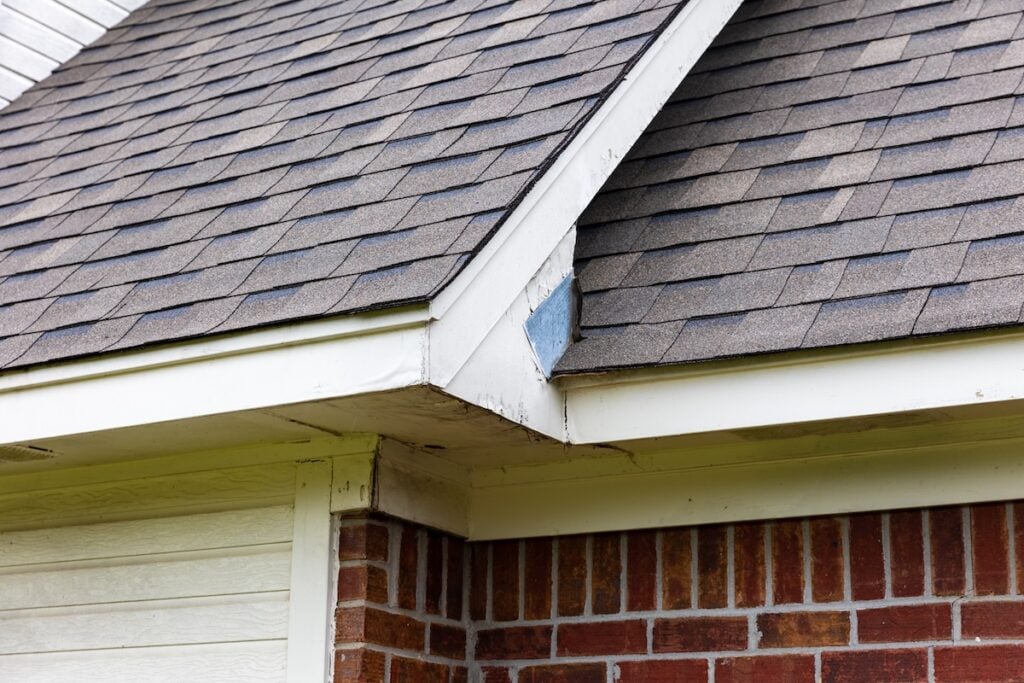
- What it means: If your soffits are painted, peeling or bubbling paint often indicates water intrusion or humidity problems. Discoloration may also be a sign of mold or mildew growth.
- Why it matters: Moisture is the #1 enemy of wood soffits. Ignoring these visual cues can lead to rot that spreads to your fascia boards and rafters.
- What to do: A professional can identify the source of moisture, repaint, and reseal or replace the affected area.
2. Visible Cracks or Holes
- What it means: Openings in the soffit material can allow insects, rodents, and birds to enter your attic space. These holes can also let in water.
- Why it matters: Once pests get inside, they often nest in insulation or chew through electrical wiring—creating fire hazards and costly repairs.
- What to do: Replace the damaged panels and install mesh screens or soffit vents if needed.
3. Animal or Insect Activity
- What it means: Hearing scratching, spotting wasps nests, or finding droppings near your soffits often means there’s a breach in the material.
- Why it matters: Texas homes are vulnerable to squirrels, raccoons, bats, and wasps—all of which can enter through damaged soffits.
- What to do: A roofer can assess the damage, perform soffit repair, and help seal off potential entry points.
4. Poor Attic Ventilation
- What it means: If your attic feels excessively hot or humid, your soffit vents may be blocked or broken.
- Why it matters: Without proper airflow, attic moisture increases, leading to mold, warped wood, and reduced shingle lifespan.
- What to do: Check for dust buildup or insulation covering soffit vents, and ask a professional to clear or replace vented panels.
5. Sagging or Warped Panels
- What it means: Wood or vinyl soffits can start to sag over time due to water damage, rot, or improper installation.
- Why it matters: Sagging soffits are often a sign of underlying structural issues like failing rafters or heavy moisture intrusion.
- What to do: Have a roofer inspect the area to determine if you need panel reinforcement, replacement, or framing repair.
6. Stains on Exterior Walls Near Eaves
- What it means: If you notice water streaks or stains on the siding directly beneath your soffits, it could mean your gutters are clogged or your soffits are failing to redirect water properly.
- Why it matters: Prolonged water exposure can lead to mold, rot, and deterioration of both your siding and roofline.
- What to do: Address gutter issues first, then inspect the soffits for moisture damage or leaks.
7. Mold or Mildew Smells Around the Attic or Eaves
- What it means: A musty smell is a red flag for hidden moisture, even if you can’t see mold yet.
- Why it matters: Mold spreads quickly in the humid Texas climate and can affect indoor air quality, especially if it penetrates the attic.
- What to do: A roofing expert can determine whether the moisture source is a venting issue, roof leak, or soffit deterioration.
👉 What Causes Soffit Damage?
Understanding the causes of soffit failure can help you prevent repeat issues down the road.
- Improper installation: If soffits were installed without proper ventilation or fasteners, they’re more likely to fail early.
- Storm damage: Texas storms can rip off panels, clog vents, or allow water to get behind the fascia.
- Blocked gutters: Overflowing water can back up under the roof edge and rot the soffit from the inside out.
- Poor ventilation: Without airflow, condensation builds up and softens wood materials.
- Pest intrusion: Animals can chew or claw their way through older soffit materials.
🛠️ Soffit Repair vs Replacement: What’s the Right Choice?
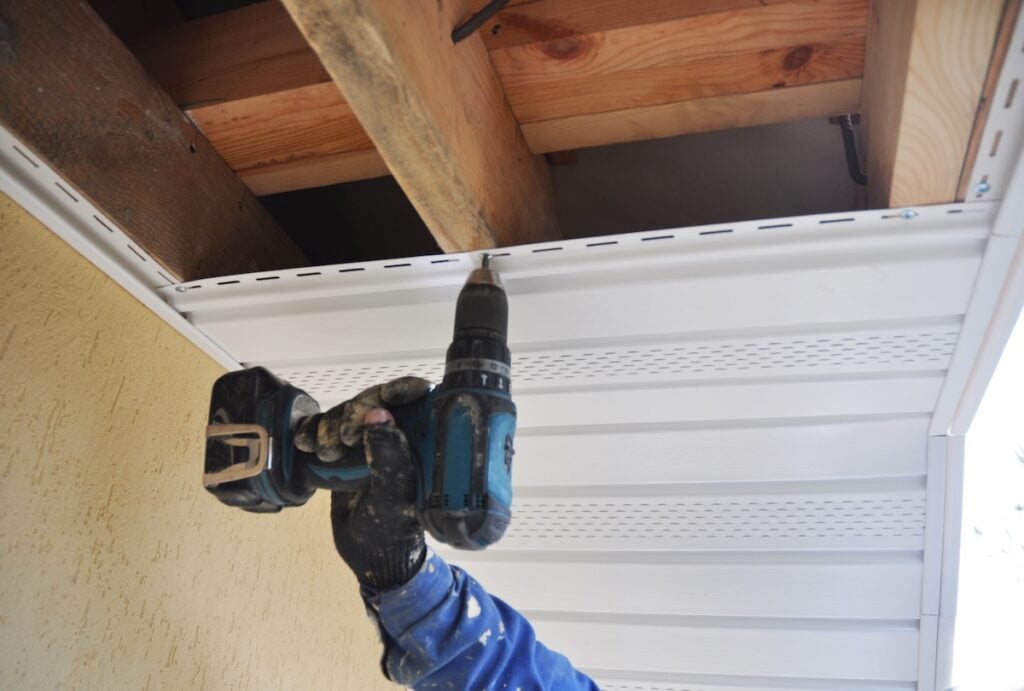
Whether you repair or replace depends on the material, extent of damage, and how long the soffits have been failing.
When to Repair
- Small cracks or localized damage
- A few vented panels clogged or broken
- No signs of underlying rot or mold
Repairs typically cost between $300 and $800, depending on the number of panels and material.
When to Replace
- Extensive water damage or mold present
- Widespread sagging or warping
- Rot has spread to fascia or framing
Full soffit replacement can range from $20 to $30 per linear foot, including labor and materials. For an average Texas home, that adds up to $1,500–$3,500+ depending on size and complexity.
🪵 Soffit Material Options in Texas
If you’re replacing soffits, consider which materials perform best in Texas heat and humidity.
Wood
- Pros: Classic look, paintable
- Cons: Requires frequent maintenance, prone to rot
- Best for: Traditional homes with well-ventilated attics
Vinyl
- Pros: Low maintenance, affordable, water-resistant
- Cons: Can warp in extreme heat
- Best for: Cost-effective repairs and replacements
Aluminum
- Pros: Strong, lightweight, resists rust and pests
- Cons: Can dent more easily than other materials
- Best for: High-performance soffits in humid climates
Composite or Fiber Cement
- Pros: Durable, fire-resistant, moisture-tolerant
- Cons: Higher upfront cost
- Best for: Long-lasting performance and minimal upkeep
💪 Protect Your Home With Professional Soffit Repair
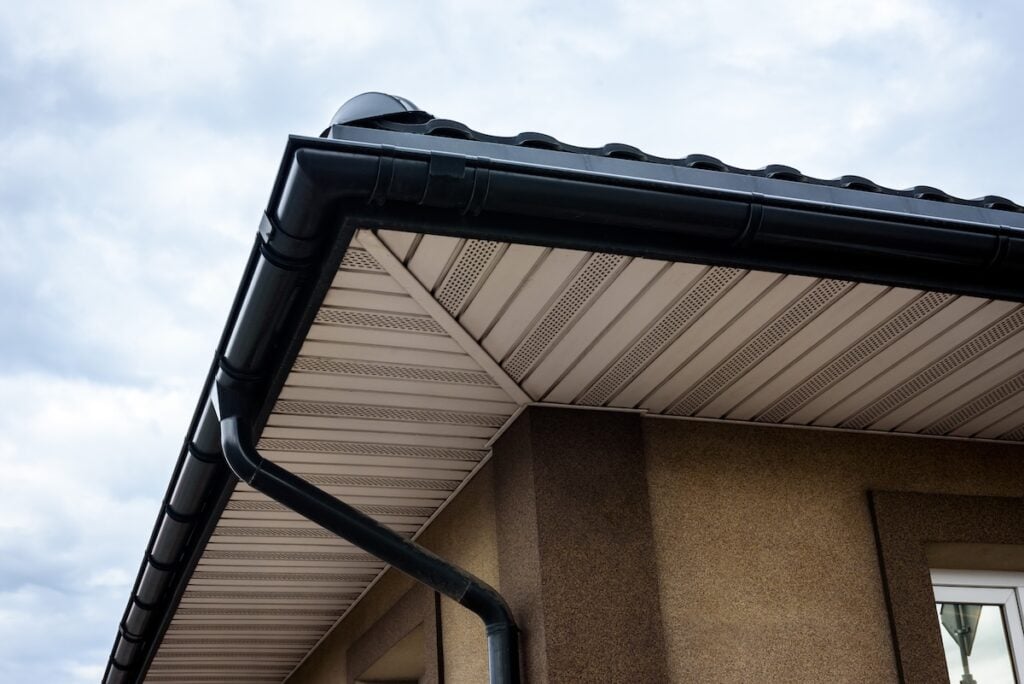
If you’re seeing signs of moisture, sagging, or pest activity around your eaves, it may be time to schedule soffit repair. Left unchecked, soffit issues can lead to much larger problems with your roof, attic, and even your home’s structure.
At M&M Roofing, we offer expert soffit inspections, honest repair recommendations, and high-quality materials designed to handle Texas weather. Whether you need a small patch or a full soffit replacement, our team is here to keep your roof system performing at its best.
Contact M&M Roofing today for a free evaluation. We’ll help you protect your home from the eaves up, with quality soffit repair you can trust.
