
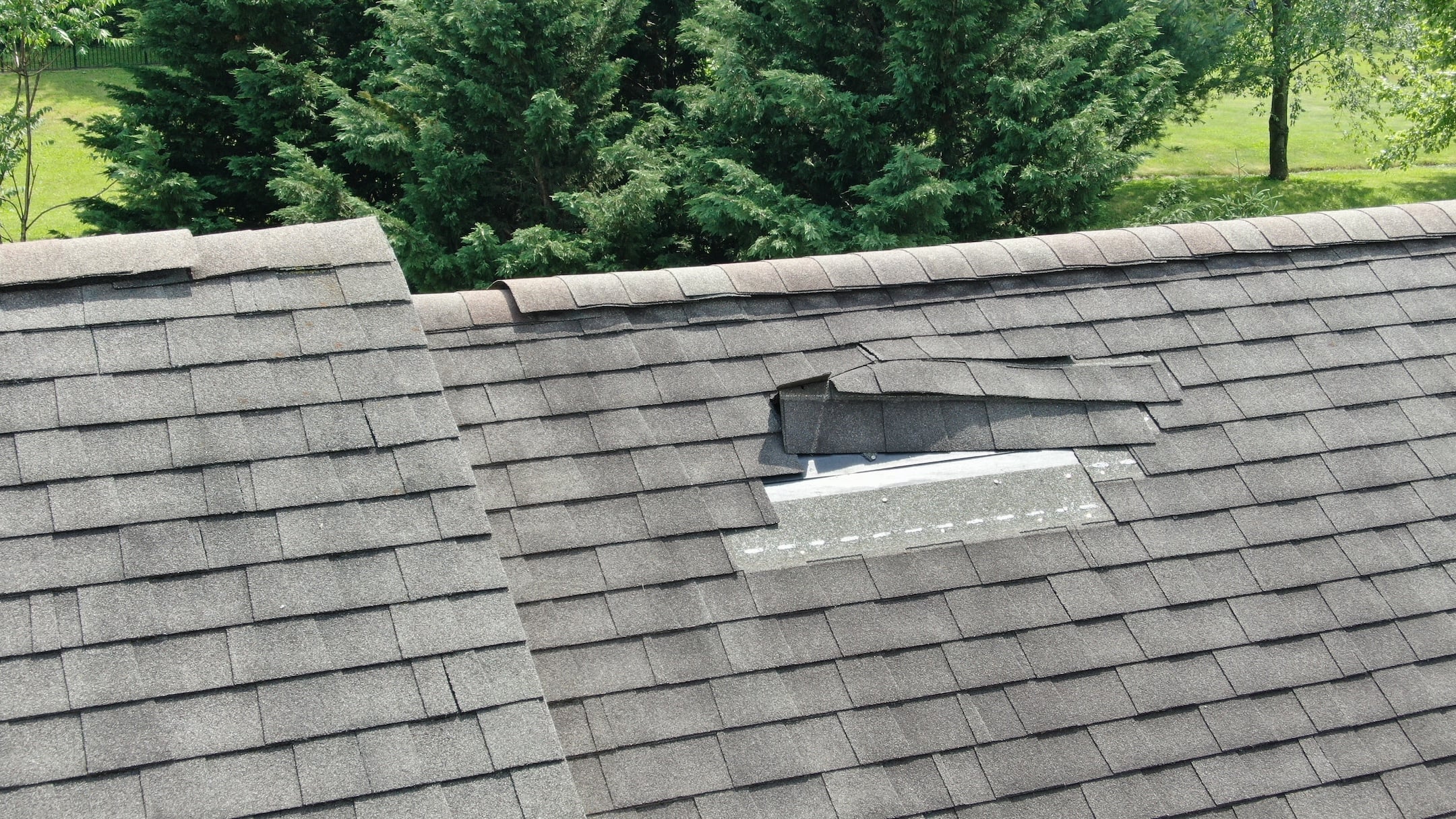
Storm Damage Roof Inspection: 7 Things Every Inspector Should Check After a Storm
A good storm damage roof inspection is a careful, top-to-bottom look at your roof to find anything a storm could have hurt, even when nothing looks wrong from the ground. Most storm damage is sneaky. A roof can lose shingles, get hit by hail, or develop a slow leak that won’t show up for months. That’s why the inspection matters so much. The whole point is to catch the small stuff before it turns into a leak, a stain on your ceiling, or a fight with your insurance company.
Here’s what you’ll learn in this guide:
- The 7 things every good inspector checks: What they look at and why each one matters.
- What hidden damage actually looks like: The signs most homeowners miss.
- What to do after the inspection: Next steps if something turns up.
Why a Storm Damage Roof Inspection Matters

Even a storm that looked mild from inside the house can leave real damage on your roof. Wind lifts shingles, hail bruises them, and tree branches knock things loose in places you can’t see from the yard. The longer that damage sits, the more it costs to fix later.
How Much Damage a Storm Can Really Cause
Storms can hurt a roof in ways you wouldn’t expect, even when the rest of the yard looks fine the next morning. According to Cotality, hail 2 inches or larger fell on more than 235,000 Texas homes in 2025 alone. That’s hail the size of a tennis ball, and it can dent metal, crack tiles, and bruise asphalt shingles in ways that lead to leaks months later. Homeowners in Marshall and surrounding areas often think a storm passed without doing much, only to find out later that their roof took a beating.
- Wind damage: Even a 60-mph gust can lift or crease shingles.
- Hail damage: Anything bigger than a quarter can bruise your shingles.
- Tree and debris damage: Branches and flying debris cause direct hits.
- Hidden damage: Most storm damage is invisible from the ground.
Why Waiting to Get Inspected Makes Things Worse
The longer you wait after a storm, the harder it gets to prove what came from that storm. Roof damage doesn’t fix itself, and a small leak today becomes a stained ceiling, a wet attic, and a mold problem in a few months. Your insurance company also has a clock running. Most policies require you to report storm damage within a few weeks, and waiting too long can mean your claim gets denied. The smart move is a free inspection within a week or two of any major storm.
- Damage spreads: Small leaks turn into bigger ones the longer they sit.
- Insurance deadlines: Most policies want you to file within weeks, not months.
- Proof gets harder: Each new storm makes it tougher to pin damage on the right one.
- It’s free: Most reputable roofing contractors inspect at no cost.
7 Things a Good Storm Damage Roof Inspection Should Cover
A real inspection goes through every part of your roof, not just the parts you can see from the ground. Here’s what every inspector worth their salt should be looking at.
1. Are Any Shingles Missing, Lifted, or Bruised?
The shingles are the first place any inspector checks because they take the worst of the storm. Missing shingles are easy to spot. The sneakier problems are lifted shingles, which got pulled up by the wind and didn’t lay back down right, and bruised shingles, which got hit by hail and lost some of their gritty protective coating. Both let water under the roof even though they look mostly fine. An inspector walks the whole roof and looks for soft spots, dark dots where the grit is gone, and edges that don’t sit flat anymore.
- Missing shingles: Big gaps where shingles got blown off entirely.
- Lifted shingles: Edges that pop up when you touch them.
- Hail bruises: Dark, soft spots where the grit got knocked off.
- Cracked shingles: Splits or cracks that let water through.
2. Is the Metal Flashing Still Sealed Around Everything?
Flashing is the metal pieces wrapped around anything that sticks up through your roof — chimneys, walls, vents, skylights. It’s also the most common place leaks start because it takes a beating during storms. An inspector checks every piece of flashing to make sure it’s still nailed down, still sealed, and not bent or pulled away from the surface it’s protecting. Even a small gap in flashing can pour water straight into your walls and attic when the next storm hits.
- Chimney flashing: Should hug the chimney tightly with no visible gaps.
- Wall flashing: Should tuck up under the siding, not stick out from it.
- Vent flashing: Should sit flat with no lifted edges.
- Skylight flashing: Should be sealed all the way around with no daylight showing.
3. Are the Gutters and Downspouts Still Doing Their Job?
Gutters often take more damage than the roof itself during a hailstorm because they’re sitting right there in the open. An inspector checks for dents that are deep enough to mess with how water flows, sections that got pulled away from the house, downspouts that came apart, and clogs from leaves and debris the storm dropped in. They also look at where the downspouts dump water. If runoff isn’t getting at least 5 feet from your foundation, that’s a problem too, just a slower one.
- Dents and dings: Anything deep enough to slow water down.
- Pulled-away sections: Gaps between the gutter and the house.
- Disconnected downspouts: Joints that came apart in the wind.
- Storm debris: Leaves and branches packed into the gutters or elbows.
4. Is There Any Water in the Attic?
This is the step plenty of inspectors skip, and it’s the one that catches leaks nobody else would find. A good inspector pokes their head into your attic with a flashlight and looks for water stains on the wood, wet insulation, daylight coming through where it shouldn’t, and any musty smell. Leaks almost always show up in the attic first, sometimes weeks before they reach the ceiling below. If something turns up here, the inspector can trace it back to the spot on the roof it came from.
- Water stains: Dark spots on the rafters or the underside of the roof deck.
- Wet insulation: Damp or compressed insulation under a leak.
- Daylight: Any visible light coming through the roof from inside the attic.
- Musty smell: A sign moisture has been working on the wood for a while.
5. Did the Vents, Skylights, or Pipe Boots Take a Hit?
Anything sticking up out of your roof is a target during a storm. Roof vents can crack from hail, get bent by wind, or fly off entirely. Skylights can crack or lose their seal. The rubber boots around plumbing pipes are especially vulnerable because they dry out and split over time, and a hailstone can finish them off. Every one of these is a leak waiting to happen if it got hit. An inspector checks each one for cracks, dents, or signs the seal isn’t tight anymore.
- Roof vents: Cracks, dents, or vents that came loose.
- Skylights: Cracked glass or broken seal around the frame.
- Pipe boots: Split or cracked rubber where pipes come through the roof.
- Exhaust caps: Bathroom and kitchen vent caps that took a hit.
6. Are the Soffit and Fascia in Good Shape?
The soffit is the wood or vinyl panel under the edge of your roof. The fascia is the board along the edge where the gutter attaches. Both take damage from wind, falling branches, and water that overflowed a clogged gutter. Damaged soffit and fascia let critters into your attic and let water get behind your siding. An inspector looks for missing pieces, soft or rotted spots, peeling paint, and gaps where things have pulled apart.
- Missing pieces: Sections that got ripped off by wind or debris.
- Rotted wood: Soft spots that mean water has been working on it.
- Pulled-away fascia: Gaps where the gutter is sagging and pulling the wood down.
- Critter holes: Openings where squirrels, birds, or wasps could get in.
7. What’s the Ground Around Your House Telling You?
This one surprises people, but the ground tells you a lot about how bad the storm really was. An inspector walks around the house and looks for dents on your AC unit, your mailbox, your fence, your garage door, and any cars that were parked outside. Big dents on those things mean the hail was big enough to hurt your roof too. Stray pieces of shingle in the yard or driveway are also a giveaway. If shingles came down, the roof above them is missing pieces.
- Dented AC unit: A clear sign of hail big enough to damage your roof.
- Dented fence or mailbox: Same story — measures how hard the hail hit.
- Shingle pieces in the yard: Roof material that came off during the storm.
- Tree damage: Big broken branches mean the wind was strong enough to do real harm.

What Happens After the Inspection
A good inspection ends with a clear written report, not just a verbal “looks fine” or “you need a new roof.” Here’s what to expect.
What Should Be in the Inspection Report?
The report should include dated photos of every damaged area, a list of what was found, and an honest recommendation about what needs to happen next. If the roof took real damage, the report doubles as the documentation you’ll need for your insurance company. If it didn’t, you’ve got a clean baseline for the future. Either way, you should leave the inspection knowing exactly where your roof stands. Homeowners in Marshall and surrounding areas should always ask for the report in writing, not just a quick phone call.
- Dated photos: Every problem area, clearly labeled.
- Damage list: Specific findings written out, not vague descriptions.
- Recommendation: Repair, replacement, or no action needed.
- Insurance-ready: Detailed enough to support a claim if needed.
Frequently Asked Questions About Storm Damage Roof Inspections
How soon after a storm should I get my roof inspected?
The sooner the better, ideally within a week or two of the storm. Insurance companies have deadlines, and damage spreads the longer it sits. Same-week service is normal for most reputable roofing contractors.
How much does a storm damage roof inspection cost?
Most reputable contractors do storm damage inspections for free. Be careful of anyone who charges for an inspection or pressures you to sign a contract before the inspector has even been up on the roof.
Can I inspect my own roof?
You can do a quick check from the ground using binoculars, but you shouldn’t climb up on your roof yourself. Roof falls cause thousands of serious injuries every year, and a lot of storm damage is impossible to see from below anyway. Let someone with the right gear handle it.
What if the inspector doesn’t find any damage?
That’s great news. Ask for the report anyway. Having a written record that your roof was in good shape on a specific date is valuable if a future storm causes damage that the next insurance adjuster tries to call old.
Will my insurance pay for the inspection?
You don’t usually need them to. Most roofing contractors do inspections for free as part of their service. If damage is found, the inspector can help you file your claim and meet with the adjuster on inspection day.
Should I file a claim if the damage is small?
Not always. Small repairs that cost less than your deductible aren’t worth filing a claim over, and too many claims can raise your rates or get you dropped. Ask your inspector for an honest estimate before deciding.
Why M&M Roofing Is Your Trusted Partner for Storm Damage Inspections

A storm damage roof inspection is one of the cheapest, easiest things you can do to protect your home, and putting it off is one of the most expensive mistakes you can make. M&M Roofing serves homeowners in Marshall and surrounding areas with free, no-obligation storm inspections, written reports you can use with your insurance company, and durable roof repairs and replacements built to handle East Texas weather. Every job is backed by available warranties, financing options, and our commitment to building the strongest shell for your home.
If a storm just came through your area, don’t wait to find out what it did. Contact M&M Roofing today for a free storm damage roof evaluation. A 30-minute look now is a lot cheaper than dealing with a leak six months from now.
