
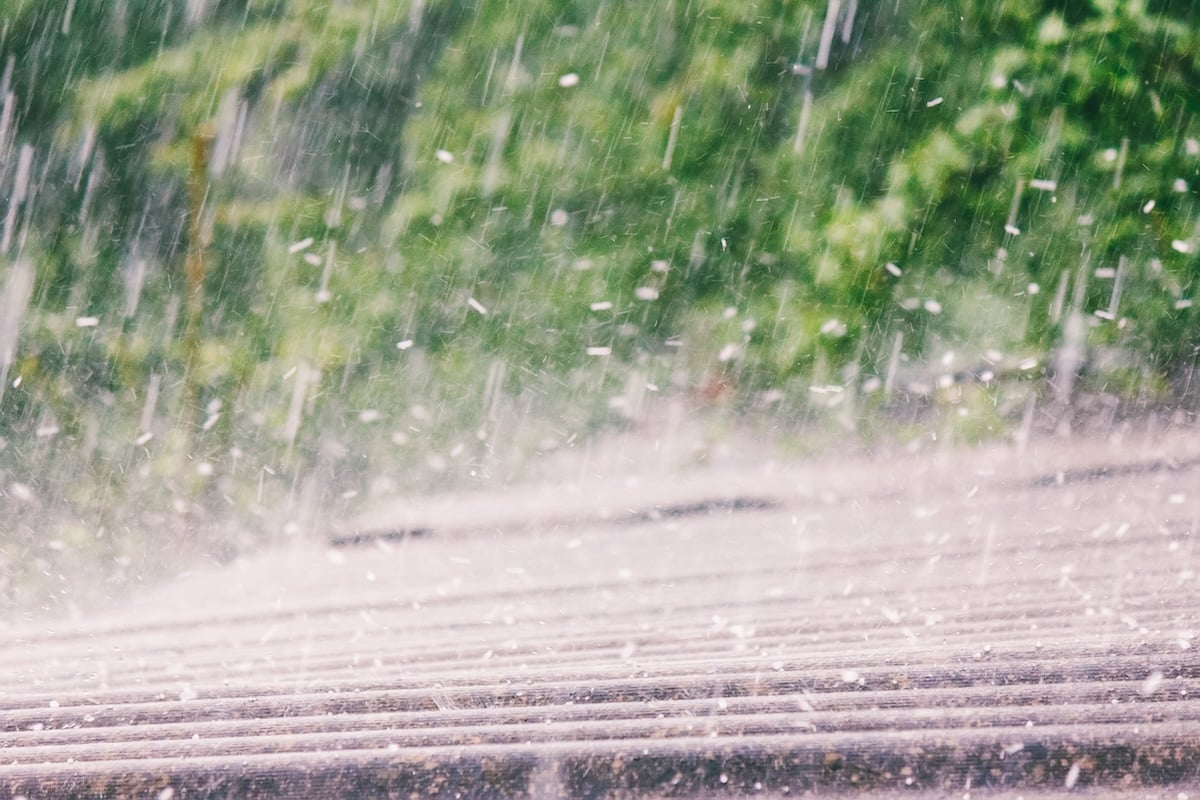
What Size Hail Actually Causes Roof Damage? (TX Edition)
If you live in Texas, hail isn’t just “storm weather.” It’s a frequent threat to your home’s roof — and it’s expensive. In fact, Texas leads the nation in property damage from hailstorms, averaging thousands of dollars in losses per 100 residents every year. Texans file more wind and hail insurance claims than anywhere else in the U.S. — a statistic that speaks to how common roof damage really is here.
So what size hail should make you worry about your roof? Here’s what roofing professionals use as a rule of thumb, and why it matters for your home.
When Hail Starts to Hurt a Roof
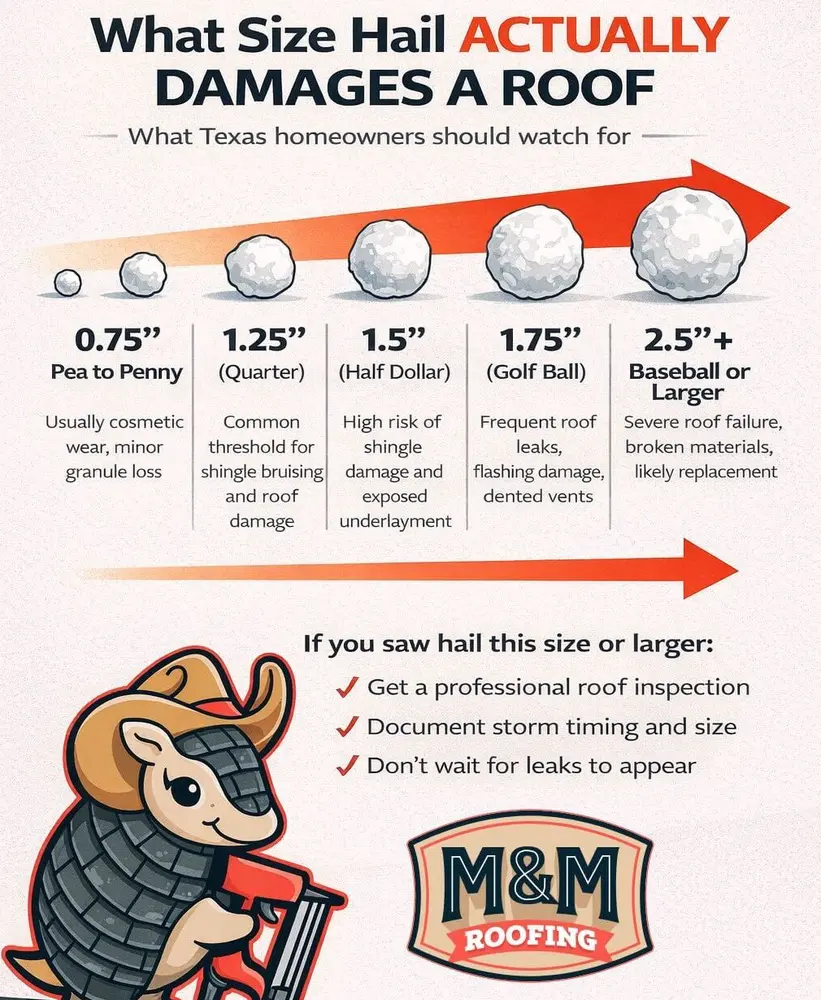
1. ¾ inch or smaller — minor wear
Hailstones this size (dime to ¾ inch) usually won’t break shingles outright, but they can start loosening protective granules on asphalt roofing.
This isn’t dramatic at first, but over time granule loss accelerates aging — especially on older roofs.
2. 1 inch (quarter-size) — the real threshold
Most roofing pros agree that hail about 1 inch in diameter — roughly the size of a quarter — is where damage becomes visible and meaningful for asphalt shingles. These impacts can bruise shingles, crack their surface, and knock off granules that protect against sun and water.
This size is often enough that:
- Insurance companies take claims seriously
- Roofers will recommend a detailed inspection
- You may see dents on soft metal components (vents, flashing)
If you saw hail this size during a storm, it’s worth checking your roof.
3. 1¼″–1½″ (half-dollar to ping-pong ball) — significant impact
When hail gets this big, the risk grows. Roof shingles, metal flashing, vents, gutters, and skylights can all sustain noticeable damage. Even roofing rated for impact resistance can show bruises and granule loss.
When multiple hailstones this size pelt your roof, the cumulative effect can shorten its lifespan and allow water to penetrate under shingles.
4. 2″ and larger — imminent roof leak threat
Hailstones the size of a golf ball or larger rarely don’t cause serious damage. At this size, shingles can crack, tear, or come off entirely. Metal components dent deeply. Even tile roofs can crack or break.
If you’ve seen hail this size, count on a professional inspection as soon as weather allows.

What Determines Whether Hail Damages Your Roof
Hail size matters, but it’s not the only factor:
Roof age and condition
Older asphalt shingles are more brittle and lose granules more easily. A storm that barely dents a newer roof can significantly harm an aging one.
Storm wind speed and direction
Hail driven by strong winds hits harder and at angles that concentrate damage.
Roofing material and impact rating
Some roofs are engineered for hail resistance. UL-rated Class 4 shingles stand up better to larger hail compared with standard three-tab shingles.
Why Texas Homeowners Should Pay Attention
Texas averages more hailstorms and property damage from hail than any other state in the U.S., with homeowners frequently paying thousands in repairs per storm. Even if your neighborhood sees dime-size hail most often, repeated storms can wear a roof down over time.
And once hail damages shingles or metal components, the clock toward leaks, rot, and interior damage starts ticking.
What to Do After a Hail Storm
- Don’t guess — inspect. Visible shingles can hide hidden damage.
- Document it. Photos and notes help with insurance claims.
- Call pros before DIY. Getting safely on a roof yourself is risky and often misses subtle bruising that technicians can spot.

A Better Way to Handle Hail Damage: M&M Roofing
When Texans see hail that’s the size of a quarter or bigger, or storms drop hail repeatedly, a professional inspection isn’t just smart — it’s necessary.
At M&M Roofing, we bring:
- Texas-tested storm experience — we know local patterns and how hail tends to strike.
- Detail-oriented inspections — we document every hail impact so you know exactly what’s happening.
- Clear communication — no roofing jargon, just what’s real and what your roof needs.
- Armadillo-level tenacity — our mascot may be tough and low-to-the-ground, but the work we do on your roof is high-quality, comprehensive, and precise.
Whether it’s a hailstorm that dropped pea-size ice pellets or golf ball–sized hail, we’ll assess the damage thoroughly and help you protect your home.
If hail hit your area this spring or summer, don’t wait. Contact M&M Roofing for a professional hail inspection that gives you confidence — not uncertainty.
