

5 Signs You Have Wind Damaged Shingles & What You Should Do About It
Wind damaged shingles are one of the most common roof problems homeowners run into, and they’re sneaky because most of the damage doesn’t look like anything from the ground. A few missing shingles you can see. The lifted edges, broken seals, and creases that lead to leaks? Those usually hide in plain sight. Catching them early is the difference between a quick repair and a soaked ceiling six months from now.
Here’s what you’ll learn in this guide:
- The 5 signs of wind damaged shingles: What to look for, even when nothing looks obviously wrong.
- How much wind it actually takes: You’d be surprised how little it can be.
- What to do next: When to call a pro, when to file a claim, and when to wait.
Why Wind Damage Is Easy to Miss
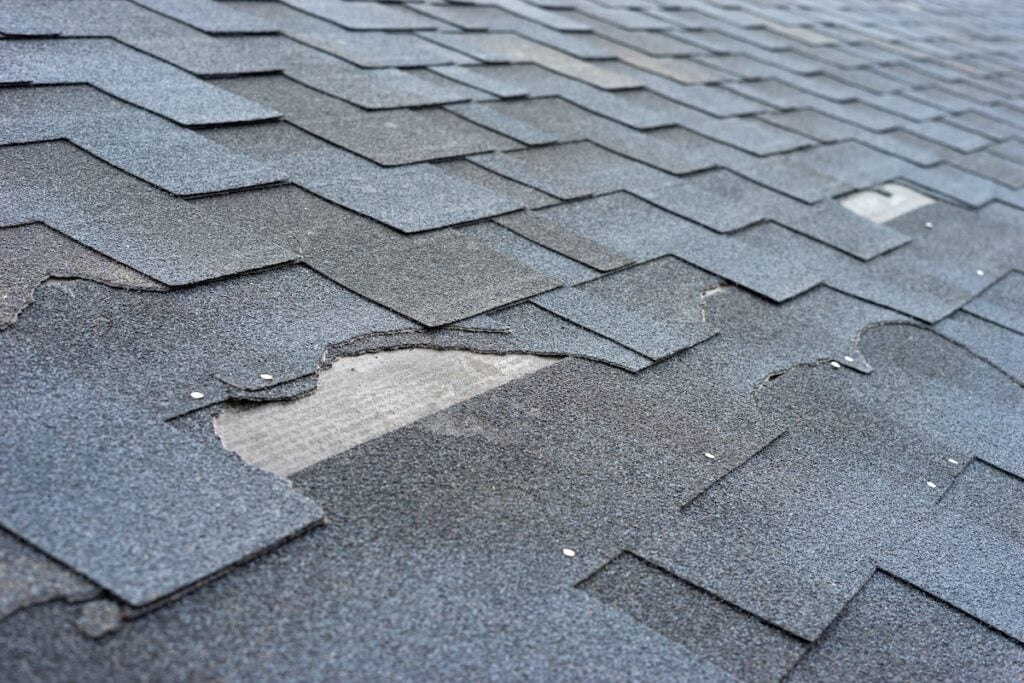
Wind doesn’t always tear your roof apart in one dramatic moment. More often, it lifts shingles just enough to break their seal, then sets them back down looking mostly normal. That seal is what keeps water out. Once it’s gone, every rainstorm after that is working against you.
How Wind Actually Damages Your Shingles
Shingles are designed to lay flat and stick to the row above them with a strip of self-sealing tar. When the wind gets under an edge, it pries that seal open. Sometimes the shingle blows off entirely. More often it lifts up, breaks the seal, and then drops back down looking fine. The damage is invisible until water finds the broken spot and starts running underneath. Homeowners in Jasper and surrounding areas often think their roof made it through a storm just fine, only to find leaks weeks later.
- Broken seals: The most common kind of wind damage and the hardest to spot.
- Lifted edges: Shingles that got pulled up and didn’t lay back down right.
- Missing pieces: The obvious damage you can see from the yard.
- Creased shingles: Folded by the wind and never the same again.
How Much Wind It Really Takes
You don’t need a tornado to damage a roof. Standard asphalt shingles are only required to handle wind up to 60 mph at minimum under U.S. code, with higher-grade shingles tested to 110 or 130 mph (Source: Professional Roofing – Understanding Asphalt Shingle Standards). A routine summer thunderstorm in East Texas can easily produce 50 to 70 mph gusts, which puts standard shingles right at their limit. Older shingles, shingles with dried-out seals, and roofs with even minor wear handle wind even worse. That’s why a “small” storm can still leave damage behind.
- Minimum code rating: 60 mph for standard asphalt shingles.
- Better shingles: Often rated to 110 or 130 mph.
- Common thunderstorm gusts: 50 to 70 mph in East Texas.
- Older roofs: Handle less wind than they used to, especially after 15 years.
5 Signs of Wind Damaged Shingles
A walk around your property after a storm tells you most of what you need to know. Here’s what to look for, in order of how easy each sign is to spot.
1. Missing Shingles
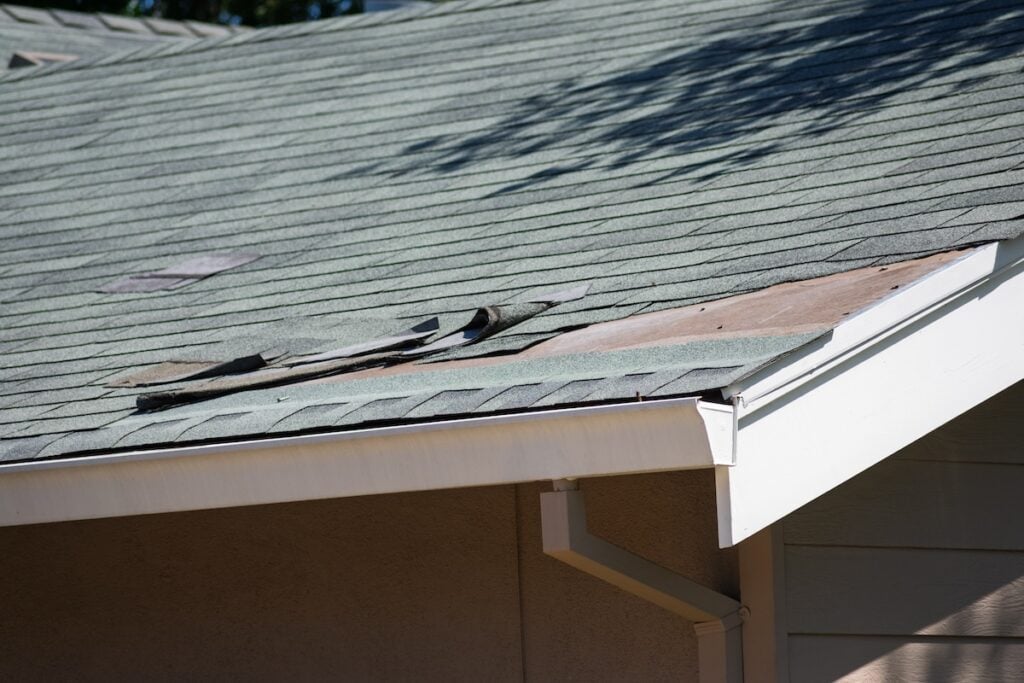
Missing shingles are the easiest sign to spot because they leave visible bare patches on your roof. Sometimes you’ll find the shingle in the yard or driveway, sometimes it’s gone for good. Even one missing shingle is a problem because it exposes the layer underneath, which isn’t built to handle direct water exposure. If you can see dark patches on your roof that look different from the rest, or if you find shingle pieces on the ground, that’s your sign.
- What it looks like: Bare or different-colored spots on the roof.
- What you might find: Whole shingles or pieces in the yard.
- Why it matters: Exposed roof layer can’t keep water out on its own.
- What to do: Cover the spot with a tarp if rain is coming, then call a pro.
2. Lifted or Curled Shingle Edges
Lifted shingles got pulled up by the wind and didn’t lay back down right. The corners stick up slightly, and the seal underneath is broken. From the ground, the roof might look fine. From the roof itself, you can spot lifted edges because they cast small shadows or pop up when you touch them. This is the most common type of wind damage, and it’s the one homeowners miss most often. A real inspection catches it. A drive-by from the yard usually doesn’t.
- What it looks like: Edges sticking up slightly instead of laying flat.
- The clue: Small shadows where shingles don’t sit tight against the row below.
- Why it matters: The seal is broken, so the next rain works underneath.
- What to do: A roofer can re-seal lifted shingles if the damage is caught early.
3. Creased or Folded Shingles
Creased shingles got bent in the wind and now have a permanent fold line across them. Even if the shingle dropped back into place, the crease weakened it, and the next strong wind will tear it the rest of the way off. Creases usually show up as a horizontal line across the shingle, sometimes with a slight color change along the fold. These almost always need replacement, not repair, because the damage to the shingle is structural.
- What it looks like: A horizontal fold line across the face of a shingle.
- Why it happens: Wind lifted the shingle, then dropped it back creased.
- Why it matters: The crease weakens the shingle for the next storm.
- What to do: Plan on replacing creased shingles, not just patching them.
4. Granules Piling Up Below Your Downspouts
Granules are the small gritty pieces that cover your shingles and protect them from the sun. When wind, hail, or hard rain knocks granules loose, they wash down into your gutters and pile up below your downspouts in little dark mounds. A few granules are normal, especially on a new roof. A lot of granules after a storm means your shingles took a beating. The shingles up there now have bare or thin spots that will age much faster than the rest of the roof.
- What it looks like: Dark, sandy piles at the base of your downspouts.
- A handful is normal: Especially on a new roof.
- A lot after a storm: A sign your shingles lost their protective coating.
- What to do: Have a pro check the roof for the spots where the granules came from.
5. Exposed Nails or Torn Shingle Edges
If you can see nail heads sticking up out of your roof, the shingle that was supposed to cover them is gone or torn back. Same goes for any shingle edge that looks shredded, jagged, or torn instead of clean. Both of these are obvious leak risks because water now has a direct path under the roof. Exposed nails will also rust over time, which makes them harder to repair properly later. Either of these signs means you’ve got a problem that needs to be fixed soon, not eventually.
- What it looks like: Visible nail heads or torn, ragged shingle edges.
- Why it matters: Water has a clear path under the roof at every exposed spot.
- Time pressure: Exposed nails rust, making the eventual fix harder.
- What to do: Call a roofer within a week, sooner if rain is in the forecast.
What to Do If You Have Wind Damaged Shingles
So you spotted one of the signs above. Here’s the smart next step, in order.
Should You File an Insurance Claim?
Whether to file a claim depends on how bad the damage is and what your deductible looks like. If only a couple of shingles need replacing and the repair would cost less than your deductible, it’s usually not worth filing. If the damage is widespread, or if you’ve got creased shingles across a whole section, that’s claim territory. Have a roofing contractor inspect it first and give you a written estimate. That estimate tells you whether a claim makes sense and gives you the documentation you’ll need if you decide to file.
- Small damage: Usually cheaper to pay out of pocket than file a claim.
- Widespread damage: File a claim, especially if it’s near or over your deductible.
- Deadline: Most policies want you to file within 30 to 60 days of the storm.
- Documentation: Get a written estimate and dated photos before calling your insurance.
When Repair Beats Replacement
A few damaged shingles in one spot is usually a repair, not a replacement. If the roof is younger than 15 years and the damage is in one area, a roofer can swap out the bad shingles and reseal the surrounding ones. If the damage is spread across multiple areas, the roof is older than 15 years, or shingles are creased across whole sections, replacement starts to make more sense. A good contractor will tell you honestly which one your roof needs, even if the answer is “it’s still fine, just patch it.”
- Repair makes sense: Younger roofs with damage in one area.
- Replace makes sense: Older roofs or damage across multiple sections.
- The honest answer: A good roofer will recommend repair when repair is enough.
- Second opinion: Get one if a contractor pushes a full replacement on minor damage.
Frequently Asked Questions About Wind Damaged Shingles
Can I see wind damage from the ground?
Sometimes. Missing shingles and big creases are visible from the yard, especially with binoculars. Lifted edges, broken seals, and granule loss usually aren’t. That’s why a real inspection by someone who can get on the roof matters.
How soon should I get my roof inspected after a windstorm?
Within a week or two. Insurance companies have filing deadlines, and damage spreads the longer it sits. Most reputable contractors will inspect for free, so there’s no reason to wait.
Will my insurance pay for wind damaged shingles?
Usually yes, if the damage came from a wind event your policy covers and the cost is above your deductible. Aging shingles and wear-and-tear are not covered. A good written estimate from a roofer makes the claim process much easier.
Should I climb up and check my roof myself?
No. Falls from ladders cause thousands of serious injuries every year, and a lot of wind damage is hard to see even when you’re standing right on it. Let someone with the right gear handle the inspection.
Can wind damage void my roof warranty?
Wind damage above your shingle’s rated wind speed isn’t covered by most manufacturer warranties. But damage from regular storms within the warranty period usually is, as long as the roof was installed correctly with the right number of nails. Keep your warranty paperwork handy.
How long do shingles last in windy areas?
In areas with regular high winds like Jasper and surrounding areas, expect 15 to 25 years out of standard asphalt shingles. Higher-rated wind-resistant shingles can last longer. Both will age faster if they don’t get regular inspections after storms.
Why M&M Roofing Is Your Trusted Partner for Wind Damaged Shingles

Catching wind damaged shingles early is the cheapest way to protect your home, and putting it off is one of the most expensive mistakes you can make. M&M Roofing serves homeowners in Jasper and surrounding areas with free, no-obligation inspections, written reports that work for insurance claims, and durable repairs and replacements built to handle East Texas weather. Every job is backed by available warranties, financing options, and our commitment to building the strongest shell for your home.
If a storm just came through your area, or you’ve spotted any of the signs above, contact M&M Roofing today for a free wind damage inspection. A 30-minute look now is a lot cheaper than dealing with a leak six months from now.
