
How to tell if a tile roof needs to be replaced?
How to tell if a tile roof needs to be replaced?
A tile roof may need to be replaced when damage is widespread, leaks keep returning, the underlayment has deteriorated, or repairs no longer restore dependable performance. A few broken tiles may only need repair. In East Texas, a professional roof inspection can determine whether the problem is isolated or affects the broader roofing system.
When Does Tile Damage Point to Roof Replacement?
A cracked or broken tile does not automatically mean the entire roof needs replacement. If the damage is limited to a small area and the materials beneath it are sound, a targeted repair may be enough. The more useful question is whether the roof has an isolated defect or a problem that extends across a larger area.
Widespread damage changes that decision. When many tiles are broken, displaced, or no longer protecting the roof as intended, replacing individual pieces may leave other vulnerable areas in place. A roofing professional can assess the extent of the damage and whether repair can restore dependable performance.
The visible tiles are only part of that assessment. Their condition offers clues, but it does not reveal everything happening beneath them. A roof that appears to have only a few damaged tiles may have a larger issue below the surface, while a visibly broken tile may be a straightforward repair.
Do Repeated Leaks Mean a Tile Roof Needs Replacement?
Leaks that return after repairs deserve a closer look. One leak may come from a specific damaged area that can be repaired. If moisture keeps appearing, the original source may not have been fully resolved, or the problem may involve more than one part of the roofing system.
The location of an indoor stain does not necessarily identify the exact point where water enters. Water can move along roof materials before it becomes visible inside. That is why repeatedly repairing the area directly above a stain may not resolve the cause.
In East Texas, a professional inspection can examine the roof as a whole when leaks continue. The findings may support another targeted repair, or they may show that multiple areas are no longer performing reliably. Replacement becomes a stronger consideration when repairs cannot keep the roof dry.
Why Does the Underlayment Matter?
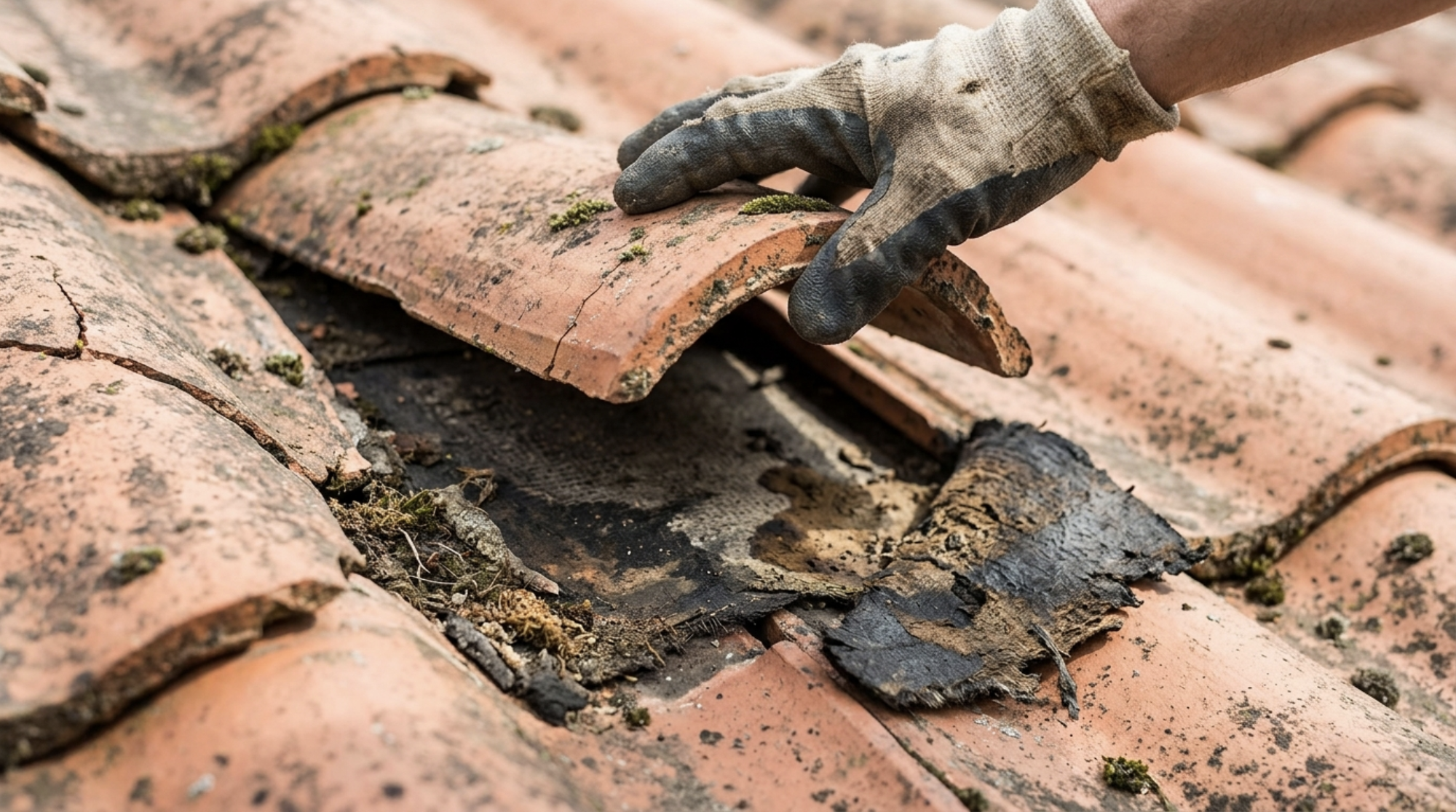
Tile roofs rely on more than the tiles people can see. Underlayment beneath the tiles is part of the system that helps protect the structure from water. If it has deteriorated across a broad area, replacing a handful of visible tiles will not address the underlying problem.
A roofing professional may need to evaluate the materials beneath the tiles to understand the roof’s condition. This matters when leaks recur without an obvious pattern of broken tiles. It also matters when previous repairs have addressed visible damage but moisture problems continue.
Deteriorated underlayment does not mean every roof requires the same solution. The extent and location of the deterioration are important. If the problem is confined to one area, a repair may be appropriate. If it affects much of the roof, replacement may provide a more dependable way to address it.
How Can an Inspection Help You Decide Between Repair and Replacement?
The decision comes down to the condition of the entire roofing system, not the number of broken tiles alone. An inspection can document visible tile damage, look into recurring leaks, and assess whether the materials beneath the tiles remain sound. It can also consider whether earlier repairs have held up.
For example, a roof with two broken tiles and otherwise sound materials may need only a focused repair. A roof with damage in several areas, repeated leaks, and deteriorated underlayment presents a different situation. In that case, continuing to replace individual tiles may not restore dependable performance.
For property owners in East Texas, an inspection provides a clearer basis for deciding what work the roof needs. It can identify whether the issue is isolated, whether a repair can address it, or whether the broader condition of the roof supports replacement.
FAQ
Does one broken tile mean the whole roof needs replacing?
No. A single broken tile may only require repair if the surrounding roof and underlying materials are in good condition. An inspection can check for less visible damage.
Can a tile roof leak even when the tiles look intact?
Yes. Visible tiles do not show the condition of every material beneath them. A professional inspection can investigate the source of a leak and assess the underlayment.
Should a tile roof be replaced if a leak returns after repair?
A returning leak calls for further investigation, but it does not automatically require replacement. The decision depends on the leak’s source and the roof’s overall condition.
What is the main sign that repairs are no longer enough?
Repairs may no longer be enough when damage or underlayment deterioration affects a broad area, or when leaks keep returning despite work on isolated sections.
How to tell if a tile roof needs to be replaced?
A tile roof may need replacement when damage is widespread, leaks keep returning, the underlayment has deteriorated, or repairs no longer restore dependable performance. A few broken tiles may only require repair. In East Texas, a professional roof inspection can determine whether the problem is isolated or affects the broader roofing system.
Conclusion
A tile roof may need replacement when widespread damage, recurring leaks, or deteriorated underlayment prevents repairs from restoring dependable performance. Limited damage, such as a few broken tiles, may only call for repair.
If you are unsure about your tile roof’s condition, M&M Roofing can inspect it and explain whether roof repair or roof replacement is appropriate for your East Texas property.
