What is the difference between industrial and commercial roofing, and why does it matter for your property?
What is the difference between industrial and commercial roofing, and why does it matter for your property?
Industrial roofing typically emphasizes durability, chemical resistance, and heavy-duty performance around demanding operations. Commercial roofing also prioritizes weather protection and longevity but may give more weight to appearance, energy performance, and tenant needs. For East Texas property owners, the distinction matters because roofing should match the building’s use and operating conditions.
How Do Industrial and Commercial Roofing Priorities Differ?
Industrial and commercial roofing share a basic purpose: protecting the building and supporting its continued use. The difference is usually the operating environment and the priorities that guide roofing decisions.
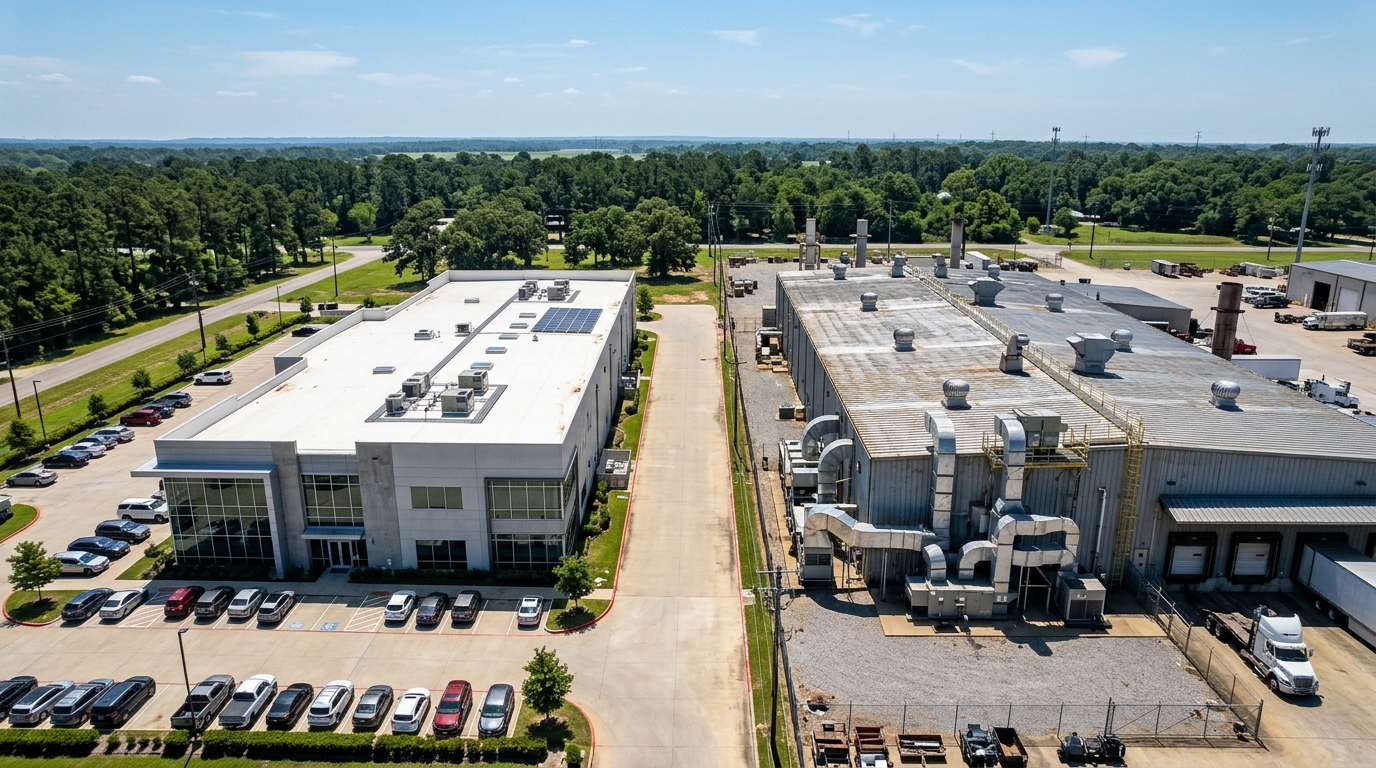
Industrial properties may house manufacturing, processing, storage, or other demanding activities. Roofing decisions should account for the conditions those activities create. Where chemical exposure or intensive maintenance requirements are present, resistance and durability become especially important.
Commercial properties may serve offices, retail businesses, or tenants with different expectations. Weather protection remains essential, but appearance, energy performance, and the needs of occupants may carry greater weight when comparing systems.
These categories are useful starting points, rather than complete specifications. An industrial building does not automatically require the same roofing as every other industrial property. Likewise, two commercial buildings may need different systems because their layouts, activities, and maintenance requirements differ.
The practical question is what the roof must handle at that particular property.
Which Operating Conditions Matter When Choosing a Roofing System?
A roofing system should be evaluated against the conditions it will actually face. The building’s label provides context, but its daily use offers more specific information.
For an East Texas property, useful considerations include:
- Operational exposure: Whether activities create chemical exposure or other conditions that affect roofing material selection.
- Performance demands: How demanding operations influence durability and maintenance needs.
- Occupant priorities: Whether tenant comfort, energy performance, or appearance is a significant concern.
- Maintenance access: How inspections and roof repair can be coordinated with building activities.
- Building use: Whether the property has one consistent function or several areas with different requirements.
For example, a building used for industrial processing may need particular attention to chemical resistance where exposure is present. An office property may place more emphasis on energy performance and tenant needs.
Neither example establishes a universal material choice. Each identifies a priority that should be discussed before selecting the system. Describing the actual exposure or operational requirement is more useful than simply requesting an “industrial roof” or a “commercial roof.”
Why Does the Roofing Difference Matter for Maintenance?
The distinction affects more than the initial roofing decision. It also helps determine how maintenance should fit the property’s operations.
At an industrial building, maintenance planning may need to accommodate demanding activities and access restrictions. The roofing discussion should address how the system will be inspected and maintained while accounting for those conditions.
At a commercial building, maintenance may need to consider tenant access, business activities, and occupied spaces. Property owners should explain these needs when discussing inspections or roof repair.
For either property type, choosing a system without considering maintenance leaves an important part of the decision unresolved. A material’s performance characteristics matter, but so does the plan for caring for it within the building’s operating environment.
Owners should also communicate changes in use. If activities inside the property change, the roofing priorities may need another review. A system selected for one set of conditions should not automatically be assumed suitable for every future use.
How Should Property Owners Compare Commercial Roofing Options?
Compare roofing recommendations by asking how each option addresses the building’s specific requirements. Industrial roofing generally gives greater emphasis to demanding operational conditions, while commercial roofing may balance protection with appearance, energy performance, and tenant expectations.
When speaking with roofing companies in East Texas, explain the property’s current use, known exposures, maintenance needs, and occupant priorities. Ask which requirements drive the recommendation and what limitations should be considered.
Keep roof repair and roof replacement discussions tied to the existing roof’s condition as well. The industrial or commercial classification alone does not establish whether replacement is necessary.
A useful recommendation should connect the proposed work to the property’s needs, giving you a clear basis for comparing options.
FAQ
Do industrial and commercial roofs serve the same basic purpose?
Yes. Both protect buildings from weather and support continued use. Their priorities differ according to operating conditions, including exposure, durability demands, appearance, energy performance, and occupant needs.
Does every industrial building need chemical-resistant roofing?
Chemical resistance becomes a priority when relevant exposure is present. The building’s activities and operating conditions should guide that decision rather than the industrial classification alone.
Can tenant needs affect commercial roofing decisions?
Yes. Tenant needs may influence priorities such as energy performance, appearance, and maintenance coordination. Those requirements should be discussed alongside weather protection and the roof’s intended performance.
Does a commercial or industrial classification determine whether replacement is needed?
No. Classification helps explain performance priorities, but repair or replacement decisions should also consider the existing roof’s condition and whether it suits the property’s operating needs.
What is the difference between industrial and commercial roofing, and why does it matter for your property?
Industrial roofing typically prioritizes durability, chemical resistance, heavy-duty performance, and maintenance around demanding operations. Commercial roofing also emphasizes weather protection and longevity but may place greater weight on appearance, energy performance, and tenant needs. East Texas property owners should match the roofing system to the building’s use and operating conditions.
Conclusion
Industrial and commercial roofing differ mainly in the demands they must accommodate. Matching the system to actual building use helps East Texas property owners evaluate durability, exposure, maintenance, and occupant priorities.
