
5 Reasons a Commercial Metal Roof Is One of the Smartest Long-Term Investments You Can Make
A commercial metal roof is one of the few building upgrades that continues to pay dividends decade after decade, which is exactly why more property owners and facility managers are choosing it over traditional flat and low-slope systems. The upfront cost is higher than TPO, EPDM, or built-up roofing, and that price tag is what turns some buyers away. Look at the numbers over 30 or 40 years, though, and metal often comes out well ahead in total cost of ownership. Fewer replacements, lower energy bills, less maintenance, and stronger storm performance all add up in ways that a spreadsheet can measure and a building can prove.
Here is what you will learn in this guide:
- The 5 reasons metal makes long-term financial sense: From lifespan to insurance to property value.
- What “total cost of ownership” actually means: Beyond the sticker price on installation day.
- What to look for before you invest: The specs and contractor questions that protect your return.

Why Commercial Metal Roofs Have Become the Smart Long-Term Choice
Commercial metal roofing has moved from niche to mainstream because building owners are running the math and seeing what happens when a roof lasts three times as long as the alternatives. The decision starts with understanding what you are actually comparing.
How Metal Compares to Traditional Commercial Roof Systems
A traditional single-ply commercial roof like TPO or EPDM typically lasts 15 to 25 years before it needs to be replaced. Built-up roofing lasts a bit longer, and modified bitumen falls in a similar range. A properly installed commercial metal roof can last 40 to 70 years, and premium standing seam systems have been documented to perform beyond 100 years in some cases. That means over the life of the building itself, metal often replaces zero roofs where a single-ply system would have replaced two or three. Building owners in Marshall and surrounding areas comparing bids across systems often find the metal option looks expensive on day one and cheap by year 25.
- TPO and EPDM: 15 to 25 years typical service life.
- Built-up and modified bitumen: 20 to 30 years in most climates.
- Commercial metal: 40 to 70 years with documented cases well beyond that.
- Fewer replacements: Metal often outlasts one or two full replacements of other systems.
What “Long-Term Investment” Really Means for a Commercial Roof
Long-term investment in a commercial roof is about total cost of ownership, not upfront price. Total cost of ownership includes purchase and installation, energy costs over the building’s life, maintenance and repair expenses, downtime from leaks and replacements, insurance premiums, and disposal costs at end of life. On any of those measures except the first, metal generally beats single-ply and built-up systems. When you add them all up over 30 or 40 years, a metal roof often costs less per year of service life than the “cheaper” alternatives, even when the sticker price is 20% to 50% higher on day one.
- Purchase and installation: Higher upfront cost for metal, typically 20% to 50% more.
- Energy costs: Reflective metal roofs cut cooling loads significantly.
- Maintenance: Metal requires far less than membrane systems.
- Disposal: Metal is recyclable at end of life, avoiding landfill fees.
5 Reasons a Commercial Metal Roof Pays Off Long-Term
Here are the five specific ways a commercial metal roof returns value over the decades it stays in service.
1. Exceptional Lifespan of 40 to 70 Years
The single strongest argument for commercial metal roofing is how long it lasts. According to the Metal Construction Association’s Service Life Assessment of Low-Slope Metal Roof Systems, unpainted 55% aluminum-zinc alloy-coated steel standing seam roofs have an expected service life in excess of 60 years, with individual panel life expectancies averaging well beyond that across a range of U.S. climate zones. By comparison, most single-ply and built-up commercial systems last 15 to 25 years. That difference means metal often outlives the building it covers, avoiding entire replacement cycles that competing systems require.
- Documented lifespan: 60-plus years in real-world field studies.
- Compared to alternatives: Two to three times the service life of TPO or EPDM.
- Avoided replacements: Fewer disruptions to operations and less capital outlay over time.
- End-of-life recyclability: Metal panels can be recycled rather than landfilled.
2. Lower Long-Term Operating Costs
Commercial metal roofs cut operating costs in two main ways: they reduce energy demand and they lower routine maintenance spending. Reflective metal roofs, especially those with cool-roof coatings, can lower cooling loads significantly, which translates directly into reduced HVAC runtime during Texas summers. A properly ventilated attic space or plenum below a reflective metal roof stays cooler, and the HVAC system does less work to maintain interior temperatures. Over a 30 or 40-year service life, those cooling savings can add up to tens of thousands of dollars for a mid-sized commercial building.
- Cooling savings: Reflective metal roofs cut summer cooling demand.
- HVAC lifespan: Reduced runtime extends the life of rooftop units.
- Peak demand charges: Commercial buildings often pay premium rates during peak hours that reflective roofs help avoid.
- Insulation compatibility: Metal systems work well with added insulation for even better performance.
3. Minimal Maintenance and Less Downtime
Commercial metal roofs require significantly less maintenance than membrane or built-up systems, which means fewer service calls, less downtime, and lower annual roofing budgets. Membrane roofs need regular seam inspections, ponding water monitoring, and periodic recoating. Built-up roofs need surface repairs and eventual full recoating. Metal systems need visual inspections, occasional fastener checks on exposed-fastener systems, and sealant replacement at penetrations every 10 to 20 years. Building owners in Marshall and surrounding areas often report their metal roofs going years between meaningful maintenance events, while their neighbors with membrane systems deal with something every season.
- Fewer service calls: Metal roofs need far less routine attention than membrane systems.
- Predictable maintenance intervals: Standing seam systems have long stretches between service needs.
- Reduced business disruption: Less time with contractors on the roof means less operational impact.
- Lower annual budget: Roofing line items on commercial P&Ls shrink dramatically with metal.
4. Superior Resistance to Storms, Hail, and Fire
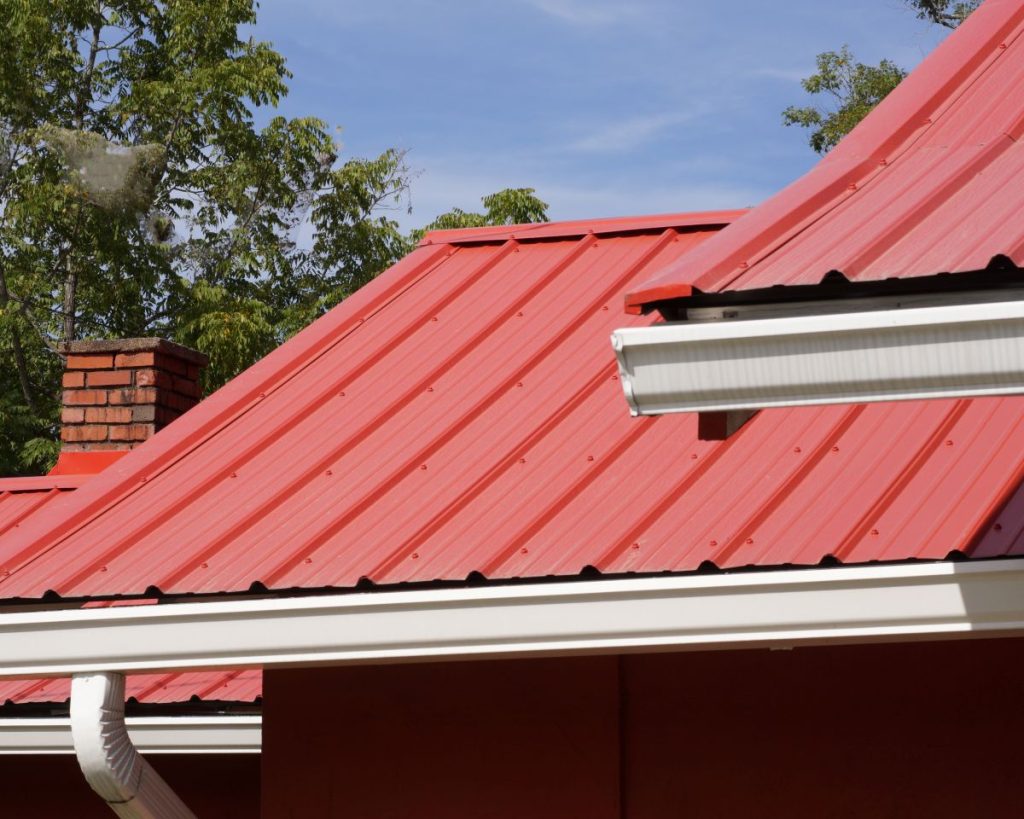
Commercial metal roofs outperform membrane and built-up systems in almost every severe weather category, which matters both for physical damage and for insurance premiums. High-quality metal roof systems can be rated to withstand winds of 140 mph or more, which is well above any single-ply membrane rating. Metal roofs also achieve the highest fire resistance rating (Class A) available for a roof system when installed over appropriate underlayment. Many metal systems can be specified with Class 4 impact ratings, the highest hail resistance rating available, which qualifies for insurance discounts in many hail-prone areas of Texas.
- Wind ratings: Up to 140 mph on quality standing seam systems.
- Class A fire resistance: The highest available rating for a roof system.
- Class 4 impact rating: Highest available hail resistance, often qualifying for insurance discounts.
- Storm event performance: Documented resilience across major storm and hail events.
5. Better Sustainability and Property Value
Commercial metal roofs improve building sustainability scores and can add measurable property value at the time of sale or lease. Metal is typically made with 25% to 95% recycled content depending on the product, and it is 100% recyclable at the end of its service life, which supports LEED certification and other green building standards. Reflective coatings on metal roofs reduce the urban heat island effect, which is another LEED credit. And because a metal roof adds 30 to 40 additional years of useful roof life to a building at sale, appraisers and buyers value the property higher than a building with an aging membrane roof approaching replacement.
- Recycled content: 25% to 95% depending on the product and manufacturer.
- End-of-life recyclability: 100% recyclable, avoiding landfill costs.
- LEED and green certifications: Metal supports multiple credit categories.
- Property value: A new metal roof adds meaningful value at sale or refinance.
What to Look for When Investing in a Commercial Metal Roof
Not every commercial metal roof is the same, and the specifications you choose and the contractor you hire determine whether you get the full 60-year return or a compromised version of it.
The Product Specs That Actually Matter
The most important product specs for a commercial metal roof are the gauge (thickness), the coating type, and the seam profile. Standard commercial applications use 22, 24, or 26-gauge steel. Lower gauge numbers mean thicker, more durable metal. The coating is what protects the steel from corrosion, and 55% aluminum-zinc alloy (Galvalume) is the current gold standard for standing seam commercial roofs. The seam profile determines how the panels lock together and how well the roof handles thermal expansion, wind uplift, and water infiltration. Standing seam profiles are the strongest and most weather-tight.
- Gauge (thickness): 22 or 24-gauge for heavy-duty commercial applications.
- Coating type: 55% Al-Zn alloy (Galvalume) for corrosion resistance.
- Seam profile: Standing seam for the strongest weather performance.
- Paint finish: PVDF (Kynar 500) finishes for long-term color and UV resistance.
How to Choose a Qualified Commercial Metal Roofing Contractor
Metal roof installation requires specific training, tools, and manufacturer certifications that not every commercial roofer has. Look for a contractor with proven metal experience on similar commercial buildings, active certifications from the specific metal manufacturer you are considering, general liability insurance, workers compensation, and local references. A qualified metal roofing contractor will also help you evaluate insulation and ventilation options that maximize the energy savings potential of the new roof. Avoid any contractor whose primary experience is in single-ply or asphalt work but who says they “also do metal” as a side offering.
- Manufacturer certifications: Specific to the metal system being installed.
- Commercial metal experience: Reference buildings you can visit or inspect.
- Full insurance coverage: General liability, workers compensation, and vehicle policies.
- Total system thinking: Insulation, ventilation, and drainage as part of the plan.
Frequently Asked Questions About Commercial Metal Roofs
How much does a commercial metal roof cost compared to a TPO or EPDM roof?
A commercial metal roof typically costs 20% to 50% more upfront than a comparable TPO or EPDM installation. Over a 30 to 40-year period, however, the total cost of ownership for metal is often lower because it eliminates one or two full replacement cycles that membrane roofs require.
How long does a commercial metal roof installation take?
Installation timelines depend on the building size, complexity, and weather. Most commercial metal roof installations run several days to a few weeks. A qualified contractor will give you a detailed schedule during the estimating process and communicate clearly about any weather-related timeline changes.
Are commercial metal roofs noisy inside the building?
No, not when installed correctly over insulated decking. Modern commercial metal roof systems include insulation and underlayment that eliminate the “tin roof” noise many people associate with older or improperly installed metal.
Can a metal roof be installed over my existing commercial roof?
Sometimes. Metal recover systems can be installed over some existing commercial roofs without a full tear-off, which saves time and money. Whether this works for your building depends on the current roof’s condition, the deck structure, and local building codes. A qualified contractor will assess your situation and recommend the best approach.
Will a metal roof qualify for insurance discounts?
Often yes. Class 4 impact-rated metal roofs qualify for discounts on wind and hail insurance in many hail-prone parts of Texas. Class A fire ratings can also qualify for reduced premiums. Talk to your commercial insurance carrier about specific discounts available for your building.
What warranty comes with a commercial metal roof?
Commercial metal roof warranties vary by manufacturer and contractor, but 30 to 40-year manufacturer warranties on materials are common, with separate workmanship warranties from the installer. Some enhanced warranties are available when a certified contractor installs a specific manufacturer’s system.

Why M&M Roofing Is Your Trusted Partner for Commercial Metal Roofs
A commercial metal roof is one of the few decisions where the smart move on the balance sheet is also the smart move on the building. M&M Roofing serves commercial property owners in Marshall and surrounding areas with detailed cost-of-ownership comparisons across roof systems, quality metal roof installations built to reach the upper end of their rated lifespan, and honest guidance on which system fits your building and budget. Every job comes with available warranties, financing options, and our commitment to building the strongest shell for your property from the deck to the ridge.
If you are considering a metal roof for your commercial building or comparing your options against other systems, contact M&M Roofing today for a free, no-obligation evaluation. We will walk you through the numbers, the specifications, and the long-term returns so you can invest with confidence.
