How long does an industrial roof last?
How long does an industrial roof last?
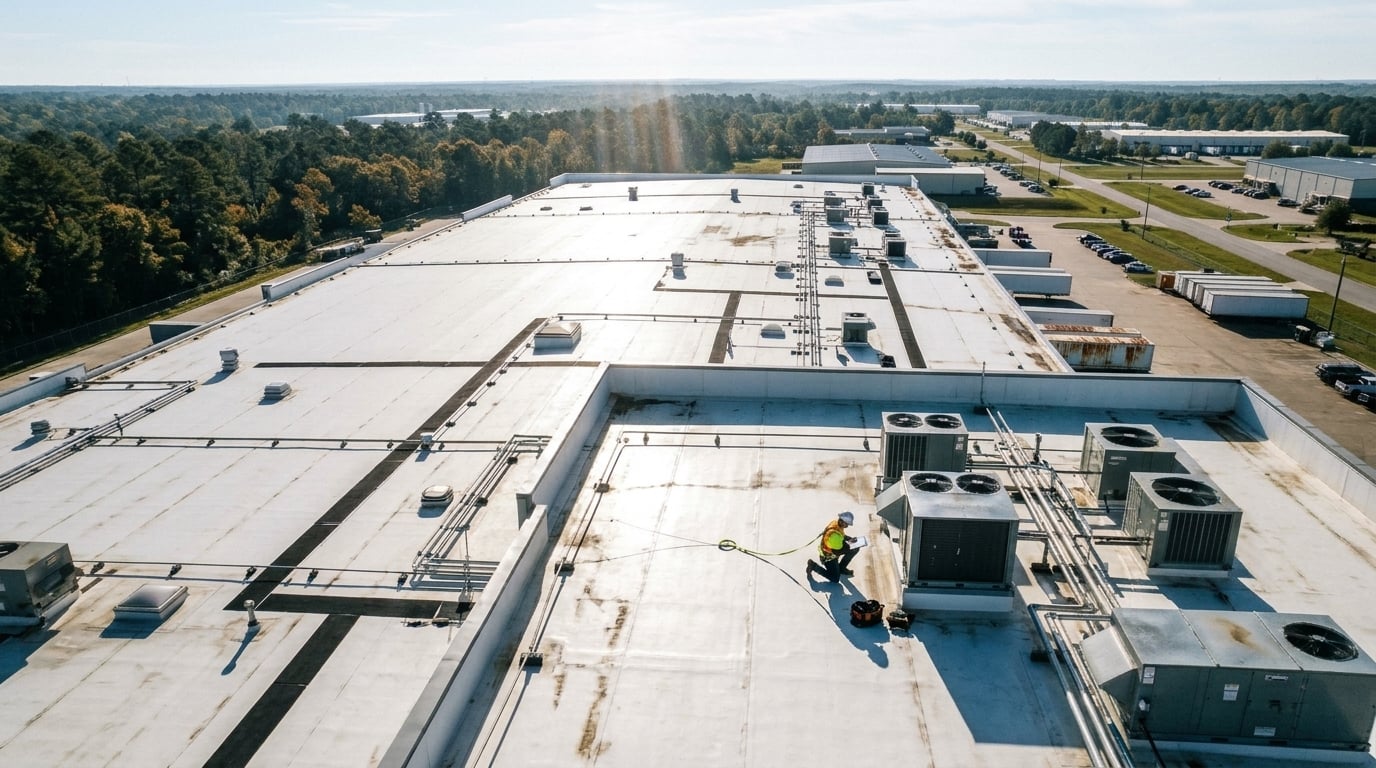
An industrial roof may last from roughly 15 to several decades, depending on the roofing system, installation quality, maintenance, drainage, exposure, and building use. There is no single lifespan for every industrial roof. In East Texas, heat, storms, rooftop equipment, and inspection history can significantly influence service life.
What the answer means for industrial roof repairs
An industrial roof may last from roughly 15 to several decades, depending on the roofing system, installation quality, maintenance, drainage, exposure, and building use. There is no single lifespan for every industrial roof. In East Texas, heat, storms, rooftop equipment, and inspection history can significantly influence service life.
The practical decision depends on the condition of the existing roof, how the building is used, the materials already in place, drainage, flashing, and the quality of prior installation. A surface-level symptom may not reveal the full condition of the assembly below it.
What a professional evaluation should consider
A roofing evaluation should look beyond the most visible area. Important details include seams, penetrations, edge conditions, transitions, underlayment or insulation, moisture patterns, attachment, and the surrounding roof field.
The goal is to determine whether the issue is isolated, part of broader deterioration, or related to design and drainage. That distinction helps avoid repairs that only mask the problem.
How East Texas conditions influence the decision
East Texas roofing systems can face strong sunlight, heat, heavy rain, wind, debris, and changing moisture conditions. These factors can accelerate wear or reveal weaknesses in seams, flashing, drainage, and attachment.
Material selection and repair strategy should therefore reflect both the roof type and the local operating environment. Routine inspections are especially useful after major weather events or when interior symptoms appear.
Myth: One answer fits every roof
Roofing decisions cannot be made from one detail alone. Age, material, installation, maintenance history, building use, and current condition all affect the right next step. A careful inspection is more reliable than a broad rule applied to every property.
What to review before making a roofing decision
Before choosing a repair, replacement, material, or insurance path, property owners should gather basic information about the roof. Useful details include approximate age, material type, previous repairs, warranty records, interior symptoms, and the timing of any storm or leak. This information helps the inspection focus on likely causes rather than assumptions.
The roof should also be evaluated as a system. Surface materials work together with flashing, underlayment, insulation, fasteners, ventilation, drainage, and penetrations. A failure at one transition can create symptoms far from the original source. For commercial and industrial properties, rooftop equipment, traffic, drains, and maintenance access can also influence wear.
A written scope should explain what area will be addressed, what materials will be used, how transitions will be handled, and whether adjacent roofing remains serviceable. When insurance is involved, the contractor can document conditions and measurements, but coverage decisions remain with the insurer. Clear roles reduce confusion and help the owner compare recommendations fairly.
For East Texas properties, timing matters because active leaks can worsen during repeated storms and intense sun can age exposed materials. Temporary protection may limit additional damage, but it is not a substitute for a complete repair. The long-term solution should address the source, restore drainage and weather protection, and fit the remaining condition of the roof.
FAQ
Should a roofing contractor inspect the issue first?
Yes. An inspection can identify the source, extent, and surrounding condition before repair, replacement, or an insurance decision is made.
Can maintenance affect the recommended solution?
Yes. Maintenance history can influence whether damage is isolated, whether materials remain serviceable, and whether a repair is likely to hold.
Does roof age matter?
Yes. Age is not the only factor, but it helps determine material availability, remaining service life, and whether a localized repair is practical.
What should property owners document?
Photographs, dates, visible symptoms, prior repairs, weather events, and inspection findings can provide useful context for roofing and insurance discussions.
How long does an industrial roof last?
An industrial roof may last from roughly 15 to several decades, depending on the roofing system, installation quality, maintenance, drainage, exposure, and building use. There is no single lifespan for every industrial roof. In East Texas, heat, storms, rooftop equipment, and inspection history can significantly influence service life.
Conclusion
An industrial roof may last from roughly 15 to several decades, depending on the roofing system, installation quality, maintenance, drainage, exposure, and building use. There is no single lifespan for every industrial roof. In East Texas, heat, storms, rooftop equipment, and inspection history can significantly influence service life. The best decision depends on the specific roof, the cause of the concern, and the condition of the surrounding materials.
