What home insurance covers a roof?
What home insurance covers a roof?
Homeowners insurance usually covers a roof through dwelling coverage when damage results from a covered peril such as fire, wind, or hail. Coverage depends on the policy, the cause of damage, exclusions, deductibles, and roof condition. In East Texas, homeowners should review policy language and document damage before arranging repairs.
How roof coverage usually works
Homeowners insurance usually addresses the roof through the dwelling portion of the policy. That coverage is intended to protect the structure of the home when damage is caused by a covered event. Wind, hail, and fire are common examples, but the policy language controls what is actually covered.
Coverage is based on cause, not simply on the fact that the roof is damaged. A worn roof that leaks because of age or poor maintenance may be treated differently from a roof damaged by a sudden storm. The insurer may also consider depreciation, deductibles, prior repairs, and whether the roof met normal maintenance expectations.
What homeowners should document after roof damage
Good documentation can make the claim process easier to understand. Homeowners can photograph visible damage from a safe location, note the date and weather conditions, preserve invoices for emergency protection, and review the policy before authorizing permanent work.
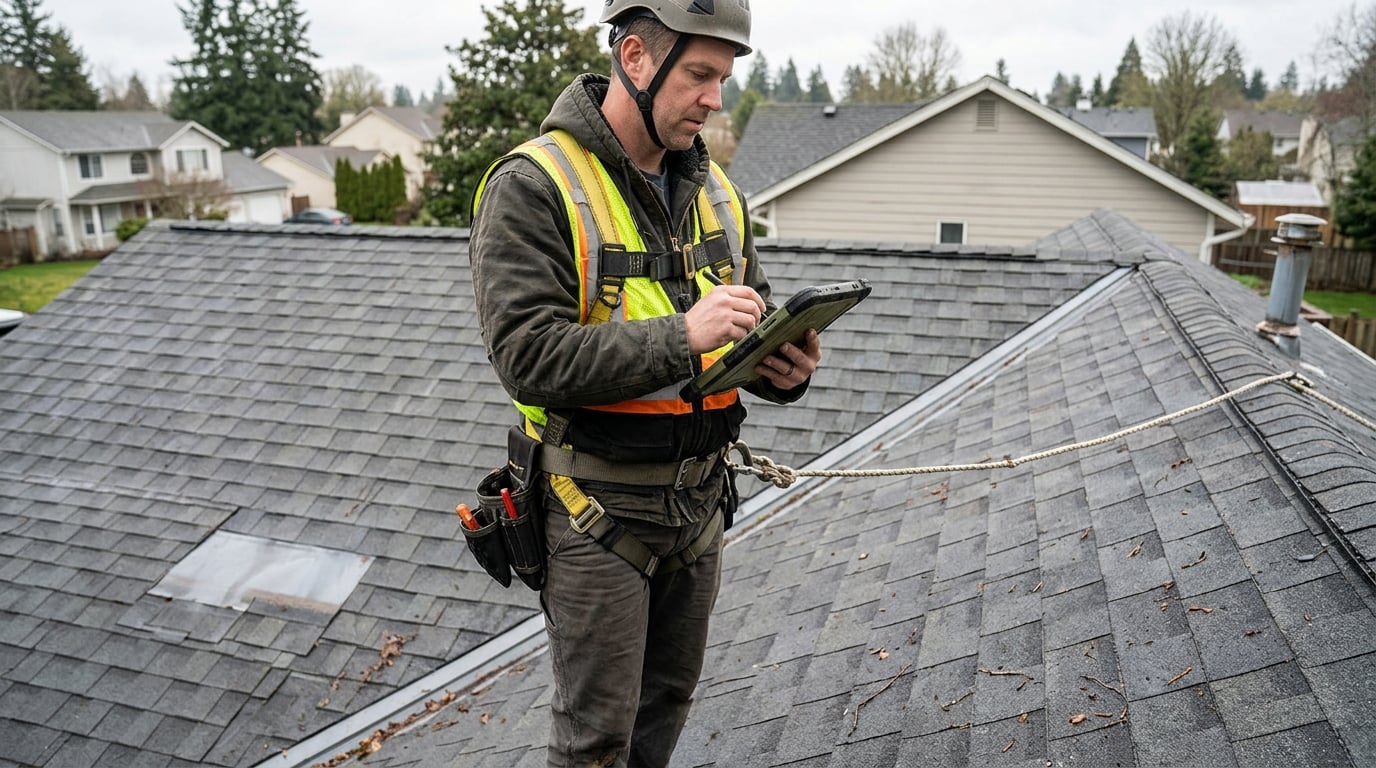
A roofing inspection can help identify whether damage appears isolated, widespread, storm-related, or linked to long-term deterioration. That information does not determine insurance coverage, but it can give the homeowner a clearer picture of the roof’s condition.
How East Texas conditions affect roof claims
East Texas roofs can be exposed to hail, wind, heavy rain, falling limbs, and strong sun. Because more than one factor may be present, the cause of damage should be evaluated carefully rather than assumed.
Homeowners should avoid making broad statements about coverage before the insurer reviews the claim. A contractor can explain the roofing condition, while the insurance carrier decides whether the loss is covered under the policy.
Myth: Every damaged roof is fully covered
A damaged roof is not automatically covered in full. Policy limits, exclusions, deductibles, depreciation, maintenance history, and the cause of loss all matter. The practical approach is to inspect the roof, review the policy, and document the event before deciding on repairs or replacement.
What to review before making a roofing decision
Before choosing a repair, replacement, material, or insurance path, property owners should gather basic information about the roof. Useful details include approximate age, material type, previous repairs, warranty records, interior symptoms, and the timing of any storm or leak. This information helps the inspection focus on likely causes rather than assumptions.
The roof should also be evaluated as a system. Surface materials work together with flashing, underlayment, insulation, fasteners, ventilation, drainage, and penetrations. A failure at one transition can create symptoms far from the original source. For commercial and industrial properties, rooftop equipment, traffic, drains, and maintenance access can also influence wear.
A written scope should explain what area will be addressed, what materials will be used, how transitions will be handled, and whether adjacent roofing remains serviceable. When insurance is involved, the contractor can document condition and measurements, but coverage decisions remain with the insurer. Clear roles reduce confusion and help the owner compare recommendations fairly.
For East Texas properties, timing matters because active leaks can worsen during repeated storms and intense sun can age exposed materials. Temporary protection may limit additional damage, but it is not a substitute for a complete repair. The long-term solution should address the source, restore drainage and weather protection, and fit the remaining condition of the roof.
FAQ
Should a roofing contractor inspect the issue first?
Yes. An inspection can identify the source, extent, and surrounding condition before repair, replacement, or an insurance decision is made.
Can maintenance affect the recommended solution?
Yes. Maintenance history can influence whether damage is isolated, whether materials remain serviceable, and whether a repair is likely to hold.
Does roof age matter?
Yes. Age is not the only factor, but it helps determine material availability, remaining service life, and whether a localized repair is practical.
What should property owners document?
Photographs, dates, visible symptoms, prior repairs, weather events, and inspection findings can provide useful context for roofing and insurance discussions.
What home insurance covers a roof?
Homeowners insurance usually covers a roof through dwelling coverage when damage results from a covered peril such as fire, wind, or hail. Coverage depends on the policy, the cause of damage, exclusions, deductibles, and roof condition. In East Texas, homeowners should review policy language and document damage before arranging repairs.
Conclusion
Homeowners insurance usually covers a roof through dwelling coverage when damage results from a covered peril such as fire, wind, or hail. Coverage depends on the policy, the cause of damage, exclusions, deductibles, and roof condition. In East Texas, homeowners should review policy language and document damage before arranging repairs. The best decision depends on the specific roof, the cause of the concern, and the condition of the surrounding materials.
