
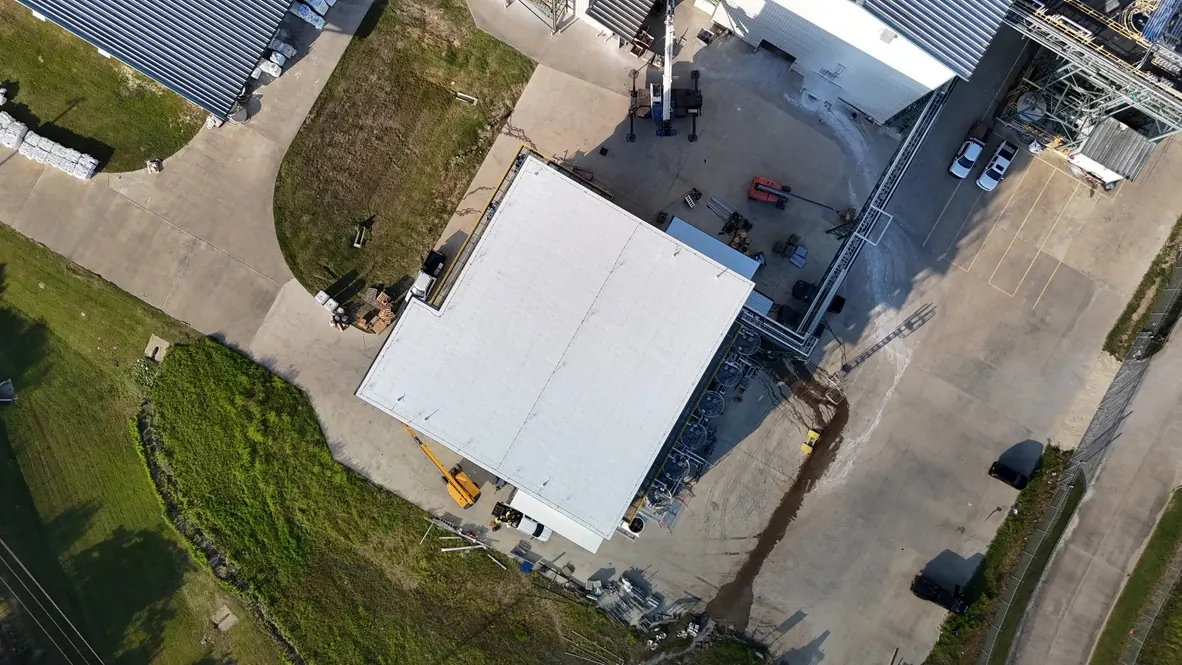
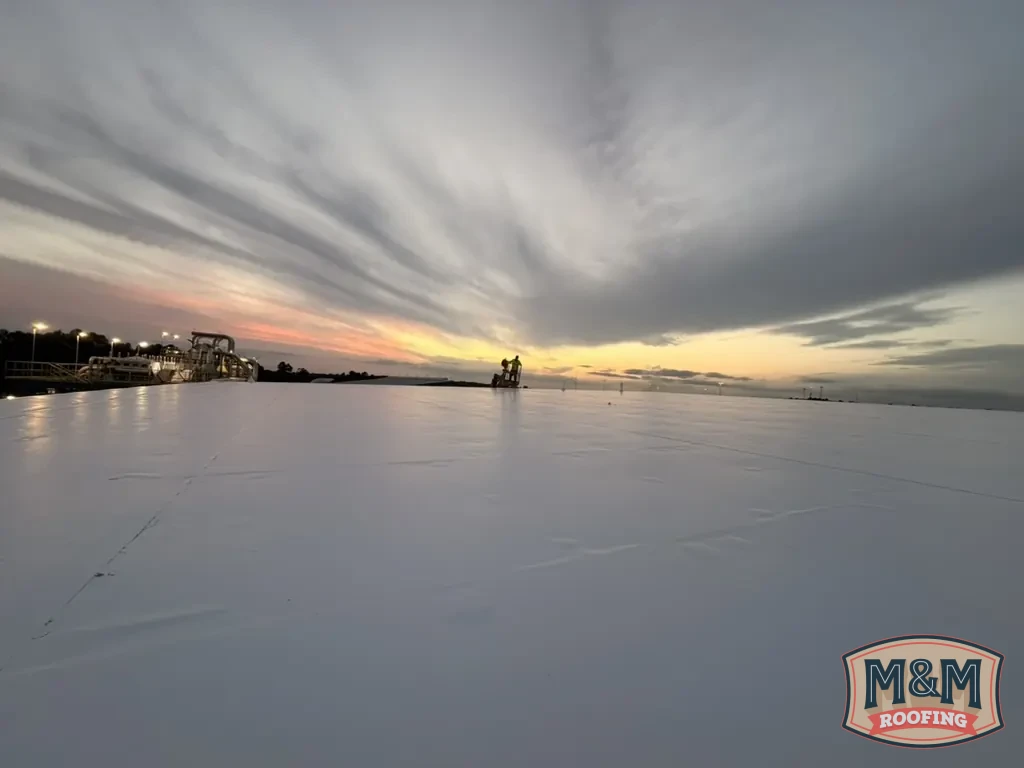
For the new construction at FACI in Lufkin, Texas, M&M Roofing installed 60-mil Sikaplan PVC roofing. This is an industrial facility, with process equipment and several buildings around the roof area. The roofing scope was a new membrane system rather than a reroof of an existing assembly.
Project details
- Facility: FACI, Lufkin, Texas
- Scope: New-construction commercial roofing
- Membrane: Sikaplan PVC, 60 mil
- Building use: Industrial
The Sikaplan specification
Sikaplan is Sika’s PVC single-ply roofing membrane. The 60-mil designation is the membrane thickness: 0.060 inches. Its polyester reinforcement helps the sheet resist tearing and stretching. The seams are joined with hot-air welding, which fuses the overlapping PVC sheets together.
For a facilities manager, the membrane is one part of the roof specification. Insulation, attachment, drainage, flashings and access for maintenance also need attention. Sikaplan has adhered and mechanically attached system options; the attachment method needs to match the deck and the building’s design requirements. A membrane thickness alone does not describe the whole assembly.
Sika’s Sikaplan membrane information covers the product family and its welded seams. For an industrial roof like this, keeping service traffic off unprotected membrane and checking flashings around equipment are practical parts of ongoing roof care.
A closer look at the roof
A new industrial roof needs a usable roof file
Once a new roof is in service, the people responsible for it need more than the product name. When a contractor changes, equipment is added or a new facilities manager takes over, the roof records should explain what was installed and who to call.
A roof file the next person can use
For a newly completed industrial roof, we recommend organizing the handover around four questions:
- Which roof area are we talking about? Give each section a consistent name on a roof plan. Match the name to dated overview photos, access points and equipment locations. Use the same labels in future service requests so everyone is discussing the same area.
- What was actually installed? Keep the final roof specification and available installation records together. Record the membrane, insulation, attachment and flashing details from the project documents. A note that says “60-mil PVC” is useful, but it does not describe the entire assembly.
- Who handles the next call? Keep the installer’s contact information with the actual warranty documents and any service agreement. Read the applicable terms for reporting a problem or arranging work. Agree on who authorizes service and who provides site access; do not leave those decisions to the person who happens to answer the phone.
- How will the file stay current? Choose someone to retain dated service reports, repair photos and records of changes to rooftop equipment. Ask visiting contractors to identify where they worked. When staff changes, transfer the roof file along with the building’s other operating records.
These are practical handover recommendations for facilities teams. They are not a description of FACI’s internal maintenance procedures or a list of documents supplied on that project.
Make the service scope clear
If you are arranging recurring roof service, discuss the covered buildings, inspection scope, documentation, access requirements and response commitments before signing an agreement. M&M’s commercial and industrial roof management is built around the needs and agreed scope of each property.
If you are preparing for an assessment of an existing roof, use our separate industrial roof assessment checklist.
Explore our commercial roofing services or view more case studies.
